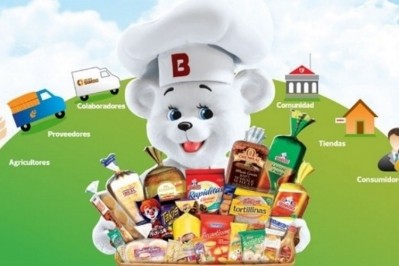
After more than four decades with his family-owned business, Daniel Javier Servijte Montull is passing on the CEO baton, having built up an impressive legacy: Bimbo today is 8x larger than when he became CEO in 1997, has completed 93 acquisitions and...
It’s bizarre to think that like fashion or food, there are emerging trends in the social impact and philanthropy spaces, but as C.D. Glin, global head of Social Impact at PepsiCo and president of the PepsiCo Foundation says, it’s the pointedness and emphasis...
The March snack box from Sakuraco embraces Japan’s breathtaking sakura (cherry blossom) season and Pringles is bringing its Honey Mustard crisps back to the snack aisle after thousands of fans took to social media asking for the tasty return. We're...
Vanderbijlpark-based Takis Biltong scored a major victory in a trademark battle over the Mexican conglomerate – the largest bakery manufacturer in the world – in the South African Supreme Court of Appeal late last year. We contacted the plaintiff’s lawyer...
SNAC International (SNAC) has donated $3,000 to the Nadia & Alf Taylor Foundation, which will support seven disadvantaged children to go to school, including access to meals and healthcare.
An Indian court has ruled that PepsiCo India Holdings can finally claim a patent for the potato variety grown exclusive for its Lay’s potato chips – but this follows a protracted legal journey of lawsuits, arguments, judges orders and appeals.
New Jersey-based Anthony & Sons Bakery is hoping to recreate the viral frenzy of the 2010s – probably the most prominent moment in avo toast history when Gwyneth Paltrow sent the internet spiralling – with the launch of its latest brand, The Avocado...
The world’s largest bakery manufacturer recently held its first Global Sustainability Summit at its head office in Mexico to review best practices, measure the progress of its Sustainability Strategy and devise plans for cooperative initiatives.
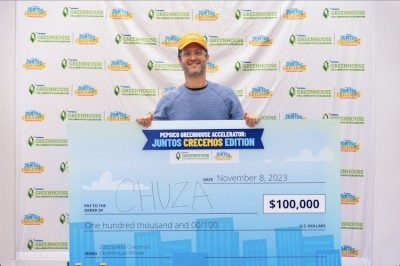
Chuza was announced the grand prize winner of the inaugural edition of PepsiCo’s Greenhouse Accelerator focused on supporting emerging Hispanic businesses.
An industry-led coalition has been formed to help millers produce adequately fortified staples to tackle the nutrition crisis gripping the globe. Millers who join Millers for Nutrition and commit to improving the nutritional quality of their food will...
Kansas State University has been awarded $22m from the US Agency for International Development (USAID) to chart an ambitious and collaborative approach to build the climate resilience of four of the world’s most consumed cereals - but the challenges are...
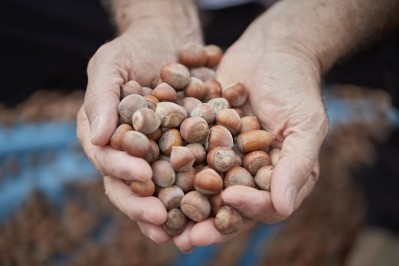
The global ingredients supplier provided health and nutrition support for 105,000 people in its cashew and hazelnut supply chains last year - one of several achievements listed in its impact report that looks back over the past 12 months.
The Texas-based snack giant has earmarked $100k in scholarship funding for college students who are uplifting and leading their communities; kicked off the third year of Building the Future Together, which serves nearly 1,000 disadvantaged families each...
The world’s largest agrifood community is among the raft of recipients to receive grants from the Citi Foundation’s first-ever Global Innovation Challenge - a new model to identify philanthropic support to community organisations that are developing innovative...
The public-private partnership is the first of its kind in Africa, bringing together the three F&B giants with Kenya’s Government and other partners to make life better for millions of the country’s emaciated children with a ready-to-drink ‘super...
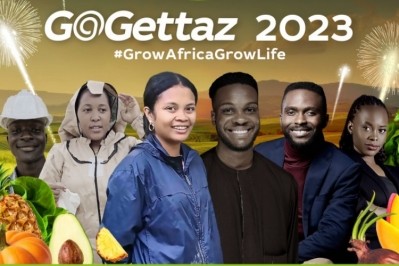
The ‘Kraken’ - the world’s most advanced palm nut de-sheller; scaling up Madagascar’s spice and herb value chains to benefit poor households; and a disease-free potato strain to combat Africa’s potato shortage are among the winners of Generation Africa’s...
The two, separated entities of the Battle Creek, Michigan-headquartered behemoth have unveiled their respective strategies, capital structures and financial outlooks ahead of the split during the fourth quarter of 2023.
ofi (olam food ingredients) has opened a herb processing facility in Egypt, culinary-centric Griffith Foods has renewed its contract as a Worldchefs Global Partner; and Univar Solutions and Kalsec have strengthened their collaboration in Europe.
Applications are now open for EIT Food’s latest Proof of Concept Call, which aims to foster a positive impact on society through public engagement initiatives that enhance consumer trust, improve health outcomes and reduce the environmental impacts of...
Millets are considered a superfood - being rich in minerals like calcium, potassium and zinc - and punted to help achieve the UN’s 2030 goal to end hunger everywhere. However, the cereals are also rich in dietary fibres, which have demonstrated to limit...
There are some really exciting developments happening in the composite flour space - particularly coming out of South Africa, Ethiopia and Pakistan - brought to light through MC Mühlenchemie’s Composite Flour Awards to mark its 100th anniversary.
For the first time in its history, the snacking giant’s Greenhouse Accelerator Programme is focused on supporting emerging Hispanic businesses that have the potential to bring forth transformative solutions to improve consumer experience, sustainability...
Almost 300 Nestlé employees - including CEO and MD Wassim ElHusseini - are putting their expertise and experience at the forefront of the Youth Leadership Mentoring Programme, which aims to instil the values, skills and attitudes needed for personal development...
While food security, health and sustainability continue to shape the food landscape, consumers are still demanding a sensory experience, which means there is a growing need for expanded protein choices that can be incorporated into bakery and snacks....
The breakfast cereal giant has joined forces with one of the largest chocolate manufacturers in the world to launch Kellogg’s Hershey’s Chocos on the Indian market.
The PepsiCo Foundation has issued a call out for Hispanic small business owners – specifically in the F&B sector – to apply for the 2023 Impacto Hispanic Business Accelerator programme.
The Lay’s, Doritos and Cheetos maker has issued a shout out to Hispanic-owned startups with disruptive ideas to join the Juntos Crecemos Edition of its successful Greenhouse Accelerator Programme.
The snacking giant has extended its highly successful greenhouse programme to the Asia-Pacific region to seek out the entrepreneurs who are developing innovative solutions that promote the circular economy for packaging and climate reduction.
Ahead of the 2025 World Health Assembly Nutrition deadline, several heads of African Union (AU) member states have called for more commitment and accountability in tackling malnutrition and food insecurity.
PepsiCo’s philanthropic arm and the Frito-Lay brand's initiative have entered into a year-long partnership with the Black Nonprofit Changemakers programme, developed to uplift community leaders and amplify their voices to showcase the positive impact...
Crown Flour Angels – an initiative of the wheat-milling business in Nigeria – has launched a baking academy to train and economically empower more women.
The Mexican bakery giant – owner of India’s Harvest Gold, Modern Bread and Kitty brands – donated 35,000 loaves of bread (equivalent to five lakh slices) to the India Food Banking Network (IFBN), as part of the India chapter of its Bimbo Global Race initiative.
During the Dakar 2 African Food Summit, the African Development Bank Group (AfDB) and the Canadian government announced the establishment of a special fund to support Africa’s small and medium-sized enterprises (SMEs) in the agriculture sector.
Mondelēz International has released its 2022 State of Snacking report, which reveals that, for the fourth consecutive year, snacking remains a preference over traditional meals, even though consumers are feeling the crunch of the current economy.
The Mexican bakery giant has acquired Vel PItar SA – a major player in branded breads and other baked goods in Romania – from US private equity firm NCH Capital for an undisclosed amount.
Be it a feasible game plan or just a pipedream, the African Development Bank Group (AfDB) is determined to make good on its pledge to eradicate hunger in Africa by 2030 by mobilising political support ahead of the African Food Summit.
The Gift of the Givers Foundation – Africa’s largest disaster response NGO – has received R6m (£285m) worth of food parcels from the PepsiCo Foundation to help the citizens of KwaZulu Natal (KZN) displaced by the devastating floods that occurred in April.
The Cheerios and Shreddies maker has contributed CFH 100,000 ($101,647) to the Africa Food Prize to unearth the bold initiatives and technical innovations that will create a new era of food security and build great climate change resilience on the continent.
CD Glin – to whom we spoke to in January about his urgency to maximise efforts to bring about change and his love of South Africa – has been appointed president of PepsiCo Foundation.
The Lay’s, Doritos and Cheetos snacking giant believes the East African country is an ‘important growth market’, putting money where its mouth is by investing ETB 2bn ($40m) in its Ethiopian subsidiary Senselet Food Processing, which produces the Sun...
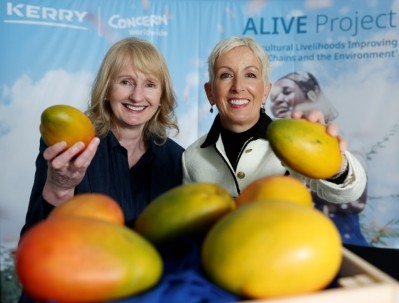
Kerry Group and Irish humanitarian organisation Concern Worldwide have embarked on a four-year partnership to provide Kenya’s female mango farming community with climate-smart agricultural practices to beat food insecurity.
Raisins South Africa is punting the benefits of the punchy dried grape, proudly shouting its health benefits and advantages in being incorporated into snacking innovations, while correcting the misconceptions around dried fruit.
The central ingredient of Kanira wholegrain biscuits is nutrient-rich and climate smart pearl millet (an under-the-radar superfood native to India); Teatis is providing a tasty solution for the 122+ million people living with diabetes or prediabetes in...
The Quaker Oats, Frito-Lay and Pringles maker has launched a series of videos showcasing how it is working with farmers in Thailand, Greece, India and Brazil to help them adapt to climate change.