


The psychology of mystery flavours revealed
- The chase is part of the fun, with each bite giving shoppers another chance to test a hunch or compare guesses.
- Doritos used a public vote to turn that curiosity into product feedback, letting shoppers decide which mystery flavour would return under its own name.
- A secret can sell the first pack, but shoppers need a reason to buy the second – a flavour they enjoyed or a fresh surprise to share.
Snack brands normally work hard to tell shoppers exactly what’s in the pack. Mystery flavours, however, do the opposite, asking people to pay first, find out later and treat the missing information as the reason to buy. It’s a cheeky reversal and a bold one when household budgets leave little room for disappointing purchases.
Consumers have an appetite for the experiment. Innova Market Insights’ 2026 Lifestyles and Attitudes survey found 25% say discovering new or interesting flavours makes food fun, while Mondelēz’s 2024 State of Snacking research found 81% pay attention to the sensory experience of their snacks. A flavour-guessing challenge invites shoppers to interrogate every mouthful.
Pringles, Twinkies, Hi-Chew and Chips Ahoy! have all turned that appetite into guessing games. The purchase buys something to eat, but also an argument to settle, an answer to chase or a reaction worth sharing. Comparing guesses and involving friends can keep attention on the brand long after the pack’s been opened.
The guessing doesn’t always end with a big reveal, either. Some brands have kept flavours unnamed for decades, making the unanswered question part of what shoppers come back for.
The gimmick’s older than TikTok
Airheads launched White Mystery in 1993, making the practice at least 33 years old. During its original taste test among schoolchildren, the team made a familiar Airheads flavour white, removing the colour cue that would normally help identify it. Only 5% guessed correctly, but afterwards pupils argued about what they’d tasted and asked for another sample to check their guesses – the unsolved flavour had brought them back for more. White Mystery became a permanent fixture in owner Perfetti Van Melle’s portfolio and was extended into gum and bites.
Other confectioners adopted the approach, including Starburst, whose 2001 ‘Name That Chew’ promotion put a mystery sweet in a white wrapper bearing a question mark and invited consumers to identify it for a chance to win prizes. Suggested answers included carrot and hamburger, adding mischief to the guessing. That same year, US lollipop maker Spangler Candy introduced Dum-Dums Mystery Flavor, which remains in its assortment with a taste the company says continually changes.
Scientists from the Chinese University of Hong Kong and the University of Chicago have explored why an uncertain outcome can be so compelling. Their 2015 Journal of Consumer Research paper found people invested more effort, time and money in pursuing an uncertain reward than a guaranteed one with a higher expected value. The effect depended on people focusing on the pursuit rather than the reward itself, with uncertainty adding excitement to the process. Applied to mystery snacks, the findings suggest that tasting, debating and guessing can become part of the enjoyment, rather than simply a wait for the answer.
PepsiCo had already built a substantial promotion around the chase with Doritos’ 2008 campaign The Quest. Targeting 16-24-year-olds interested in alternate reality games, it used clues on packs and store displays to connect a mystery flavour to online puzzles. Three finalists competed in Las Vegas for a golden artefact worth $100,000. The campaign showed how a packet of crisps could become the entrance ticket to an adventure – an approach today’s brands can use to draw shoppers into a challenge that continues online.
How much entertainment can a biscuit deliver?

Mondelēz, for example, turned flavour guessing into an online challenge in July this year with Chips Ahoy!’s first mystery cookie. Early access through TikTok Shop preceded a wider US retail launch, with a $25,000 prize encouraging consumers to submit their guesses.The pack helped explain the game without giving away the answer. Caution-tape graphics and a fictional ‘glitch’ storyline presented the unidentified cookie as a case for shoppers to solve.
Mili Laddha, senior director of marketing at Mondelēz International, said the unidentified flavour encouraged fans to “taste, debate and decode the mystery together”. She also described the cookie as “an interactive side quest”, putting the guessing at the centre of the promotion. The promised Halloween reveal gave participants a deadline for their detective work. The answer was Cake Batter Bytes – a sweet cake-batter flavour with white chocolate chips in a chewy cookie. Mondelēz had given a familiar bakery taste enough intrigue to sustain a campaign without requiring an outrageous recipe.
Sweet bakery rival JM Smucker also found mileage in the concept, introducing mystery Twinkies in 2024 and planning another release in 2027. “Consumers love having new flavours to try, but the added ‘guess the flavour’ element makes it even more engaging,” says Ali Brown, VP of marketing for sweet baked snacks.
Pringles has made the challenge a recurring attraction. Its first UK mystery campaign in 2025 distributed 1.8 million tubes and attracted more than 6,000 guesses – with suggestions ranging from wasabi and spicy meatball to melted popcorn – before revealing the flavour as Spicy Pickle.
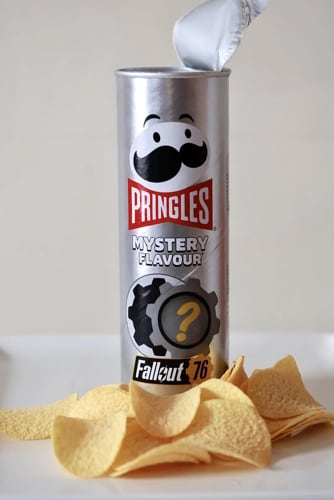
Subsequent releases have given fans new reasons to join in. Last year’s Santa’s Secret Flavour was revealed as Truffle & Butter, but this year’s edition, launched in September, remains under wraps – watch this space. A January collaboration with online multiplayer video game Fallout 76 also asked shoppers to identify a secret seasoning for a chance to win a California holiday. The flavour was eventually revealed as Cheesy Garlic Bread.
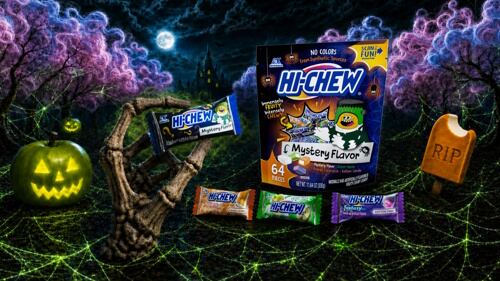
Last month, Hi-Chew took its guessing game on a five-city US tour. Its Halloween Mystery Mix placed an unidentified white chew alongside three named favourites, giving shoppers familiar flavours to enjoy while investigating the secret. The company’s leadership joined the intrigue: “Even I am kept in the dark and don’t know Hi-Chew’s newest Mystery Flavour!” admitted Teruhiro Kawabe, president and chief executive of Morinaga America, ahead of the reveal.
Why shoppers enjoy the chase
A snack becomes a game: Each mouthful offers another chance to identify the flavour, compare guesses and defend an answer, giving consumers something to do beyond eating.
Getting it right feels good: Solving the puzzle offers satisfaction, while disagreement gives friends a reason to keep tasting and debating.
Uncertainty adds excitement: Research suggests an uncertain reward can increase motivation when people enjoy pursuing it. Mystery flavours make that pursuit part of the purchase.
Experimentation feels accessible: A familiar biscuit, sweet or crisp lets shoppers explore an unexpected taste within a format they already enjoy.
Limited editions create a deadline: Shoppers have a window to taste, guess and join the conversation before the product disappears or the answer becomes public.
Reactions invite an audience: Sharing guesses or filming a tasting can introduce the product to others – particularly when consumers want friends to settle an argument or experience the surprise themselves.
Give shoppers a reason to want another pack
While the guessing game might attract consumers’ attention, the flavour still needs to taste good enough to buy again. Doritos put taste to a public vote in its 2014 Bold Flavor Experiment, asking consumers to choose their favourite from three mystery varieties. Spicy Street Taco beat Chocolate Chipotle Bacon and Caribbean Citrus Jerk and was selected to return under its own name – giving shoppers another chance to buy their favourite once the secret was out.
The conversation can also give manufacturers useful feedback beyond identifying a winner. Shoppers’ guesses reveal which flavour notes they notice, while their reactions show whether they enjoy the combination. Reading the two together can help development teams judge whether a seasoning needs adjusting or deserves a launch under its own name.
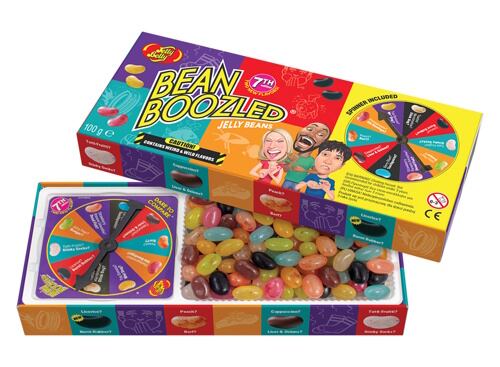
A deliberately unpleasant surprise offers a very different promise. Jelly Belly’s BeanBoozled, launched in 2007, pairs identical-looking beans with radically different tastes, so a consumer might get cappuccino or liver and onions. The reaction has become part of the game – and helped drive demand so sharply that, at the craze’s peak, its Thai operation added 150 temporary workers to its 150-strong workforce.
Skittles used a similar dare with its 2019 Zombie edition, concealing occasional ‘rotten zombie’ sweets among fruity ones and encouraging consumers to film their encounters. Brand owner Mars made the unpleasant mouthful part of the advertised challenge – a surprise consumers were invited to brave rather than a delicious secret to uncover.
The dare gives shoppers a reason to buy again even after they know what might be lurking in the bag. Other mystery snacks need their own repeat appeal, whether that’s a changing assortment with new tastes to discover or a flavour people want more of once it has a name. The ultimate prize is a fan introducing the product to friends to watch their reactions – and giving another group of potential buyers their first taste.
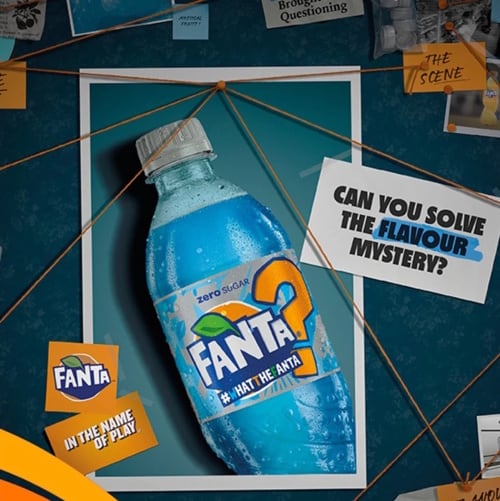
There’s commercial encouragement, too. Coca-Cola European Partners reported that its 2020 #WhatTheFanta pilot – a bright green drink sold without naming its flavour – achieved five times Fanta Orange’s rate of sale over the same period. The campaign returned in 2021 with a blue drink that could contain one of several undisclosed zero-sugar flavours. Shoppers scanned on-pack QR codes to unlock weekly clues, giving them fresh leads to follow and more than one flavour mystery to solve.
Fanta, Pringles, Twinkies, Hi-Chew and Chips Ahoy! are just a handful of brands keeping shoppers involved beyond the first taste, and producers across food and drink can draw on the same appeal. Whether consumers return for another puzzle to share with friends or a flavour worth buying under its own name, the question mark earns its place on the pack when solving it leaves them wanting more.
When mystery walks the tightrope
Novelty can lose its pull: Heinz’s EZ Squirt range included bottles concealing pink, orange or teal ketchup. The coloured range initially attracted buyers, but interest faded and it was discontinued in 2006 – underscoring that a striking first purchase needs something to sustain the next.
An obvious answer can spoil the game: Oreo’s 2017 mystery flavour drew comparisons with its earlier Fruity Crisp cookie before being revealed as Fruity Pebbles. A recognisable taste can reassure shoppers, but too much familiarity risks leaving them wondering what the mystery was supposed to be.
Curiosity doesn’t guarantee enjoyment: Mystery flavours have drawn complaints from individual consumers over the years, with some describing unpleasant, artificial tastes and lingering chemical aftertastes. Such reactions can fuel discussion, but a shopper left struggling to finish the pack has little reason to buy another.
Study:
Shen L, Fishbach A, Hsee CK, The Motivating-Uncertainty Effect: Uncertainty Increases Resource Investment in the Process of Reward Pursuit, Journal of Consumer Research, Volume 41, Issue 5, 1 February 2015, Pages 1301-1315, https://doi.org/10.1086/679418


