

Key takeaways:
- Private label’s growing quality and premiumisation – not just its low prices – is what’s forcing brands like Oreo and Doritos to innovate more aggressively rather than compete on cost alone.
- The scale of that innovation response depends heavily on resources, as shown by the gap between well-funded giants like Mondelez and PepsiCo and smaller players like Kingsmill and Hovis, who’ve had to merge instead.
- Private label pressure produces two very different outcomes depending on a brand’s capacity to respond: sharper, more inventive brands for those who can afford it, and consolidation or retreat for those who can’t.
For 30 years, the story of private label has been told as a story of decline.
Own-label ranges creep up the shelf, brand loyalty erodes, and marketing directors reach for the same grim metaphor – a slow bleed that ends, eventually, with the disappearance of the brand altogether. It’s a tidy narrative, and it isn’t wrong exactly.
Circana data shows that private label now accounts for roughly $282.8 billion in US food sales alone, with 68% of shoppers viewing it as a credible alternative to national brands and 69% perceiving it as strong value, according to NielsenIQ. In parts of Europe the picture is even starker: Sally Lyons Wyatt, Circana’s global EVP and chief advisor, has described European supermarkets as private label’s ‘core engine’, with nearly half of food and beverage value there now coming from own-label ranges.
Look at what the supposedly threatened brands are actually doing, though, and that tidy version gets harder to sustain. Oreo hasn’t quietly faded into a value-tier biscuit. It’s become one of the most restlessly inventive products in modern grocery, dropping a new flavour or collaboration almost every month and turning limited editions into a permanent marketing engine. Doritos, for its part, has spent the same stretch launching a nacho-cheese spirit, swapping flavours with Ruffles and Cheetos, and sending a food truck around Europe to serve Doritos-topped tarte tatin. Both brands are spending real money proving they still matter, and that’s a strange thing for companies supposedly being flattened by cheaper own-label rivals to be doing.
The uncomfortable possibility worth entertaining here is that private label hasn’t simply eaten branded innovation’s lunch but has, in a roundabout way, funded it.
Own label used to compete on being a cheaper, blander version of the leading brand sitting next to it on the shelf, which was easy for that brand to ignore. What retailers have built since is much harder to ignore: ranges with genuine formulation quality, distinct positioning and their own fan bases. Once the identical-but-cheaper threat became a genuinely-good-and-cheaper threat, brands lost the option of standing still. They had to become more themselves, not less.
This isn’t an argument that private label is secretly good for the brands it competes against – ask any manufacturer footing the innovation bill and they’d laugh at the suggestion. It’s an argument that the pattern across biscuits, crisps and bread holds up well enough to take seriously, even though, as the bread market shows, it hasn’t worked out the same way for everyone.
Own-label got too good to ignore
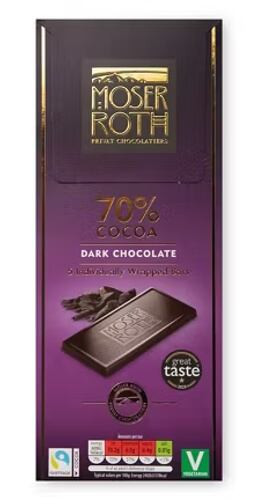
The turning point wasn’t private label existing but private label getting good enough to matter. Stiftung Warentest, Germany’s most trusted consumer testing body, tested 22 milk chocolate bars in a recent round of assessments and gave Aldi’s own-label Moser Roth dark milk chocolate a ‘Gut (2.4)’ rating, marking it out ahead of Milka and Tony’s Chocolonely on taste and texture. Aldi’s press office now publishes a steady run of similar verdicts across bread, coffee, skincare and household cleaners, each one an own-label product beating a recognised brand on independent testing rather than simply undercutting it on price.
In the UK, the premium tiers have grown fastest of all: Tesco Finest and Sainsbury’s Taste the Difference are growing three to four times faster than value private-label lines as shoppers under financial pressure look for what she calls an affordable form of escapism, according to Rama Chepala Kaki, who leads Circana’s European thought leadership,
That’s not a threat brands can out-price their way past, though it’s one that only bites if the brand next to it starts to look ordinary – which is presumably why Oreo has treated its shelf edge like a stage rather than a supply line. In 2024 alone, the brand ran through Coca-Cola, Mint Chip, Star Wars, Sour Patch Kids, Churro, Tiramisu, Dirt Cake and Space Dunk flavours, and a Supreme collaboration once resold on eBay for upwards of $90,000. Mondelez chief executive Dirk Van de Put told analysts on an earnings call that Oreo was “driving incremental lift” through its limited editions, at exactly the moment private-label crackers and cookies sit cheaper on the shelf beside it.
Circana’s Asia-Pacific arm IRI, has quantified exactly how wide that gap has become: US private-label food and beverage now sits 28% cheaper by volume than branded equivalents, a gap that widens to 38% in Australia and narrows to 22% in Europe. Retail consultant Jon Allen, CEO of Woodridge Retail Group, puts the commercial consequence more bluntly still: “If your item is 20%, 30%, or 40% higher than the retailer’s own brand, the buyer needs a reason to believe shoppers will pay the difference. That reason can’t be vague. It has to be tied to something shoppers actually value,” he said.
Doritos tells a near-identical story, only louder. The PepsiCo-owned brand has served coffee-flavoured chips through an Instagram giveaway, distilled its own nacho-cheese flavour into a $65 spirit, and run Flavor Swap campaigns that put Doritos seasoning onto Ruffles and Cheetos. It’s obvious the pressure is on.
“Today, there are the retailer brands as well as small start-up brands vying for the share of retail space, share of market and share of stomach,” noted Kunal Mehta, global ead of Marketing, Communication and Brand at dsm-firmenich. “So brands like Doritos have to innovate on all fronts – product, packaging, communication, execution and activation. They have the budgets and the muscle, and they are using all of these tactics to appeal to their target audience.”
It’s worth noting that PepsiCo’s chef-led R&D team runs food trucks specifically to test whether unconventional flavour mash-ups will land with the public before committing to a permanent listing, treating every outing as live market research rather than a finished launch.
The bakery aisle shows the theory has a limit
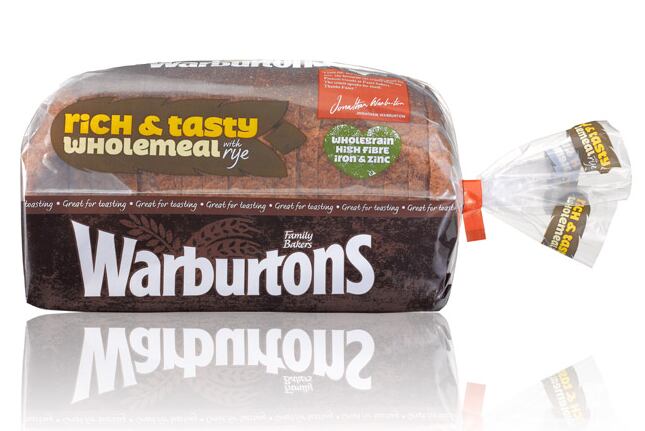
If crisps and biscuits are the flattering case study, British bread is the cautionary one, and it belongs here precisely because it complicates the argument rather than confirming it. Not every branded response to private label pressure is a Doritos spirit. Some of it is retreat, and retreat has a way of compounding.
Kingsmill and Hovis have faced a trio of competitive threats – private label, artisan products like sourdough, and the strength of family-owned Warburtons, which built the largest branded bakery business on marketing and innovation. The two responses since have gone in opposite directions. Warburtons has leaned into new products across its bakery categories, and its latest accounts show volumes up 4.2% in its most recent financial year, turnover up 3.8% to £769.9m, and operating profit up 30% to £43.2m, with the business explicitly crediting its research and innovation centre. Kingsmill and Hovis, by contrast, saw sales fall by £33.1m and £33.9m respectively in the year to September 2025 – nearly a third of Kingsmill’s annual value wiped out, and are now merging out of what Shore Capital analyst Clive Black called “a merger out of distress, not out of progression.”
That’s the qualifier the Oreo-and-Doritos story needs. Innovation as a response to private label pressure works brilliantly when a brand has the marketing budget, the R&D infrastructure and the cultural relevance to pull it off – Mondelez and PepsiCo both sit inside portfolios worth tens of billions, with money to burn on flavour experiments that flop quietly and collaborations that land loudly. Warburtons, still family-run and celebrating its 150th anniversary, has poured £46.6 million into its bakeries and distribution fleet in a single year.
Brands without that firepower don’t get to out-innovate the pressure. They get squeezed into the same commodity middle ground that private label was supposed to have vacated, and the merger lawyers get involved instead of the flavour chemists.
What this actually means for brand strategy

The honest reading of all this isn’t that private label is secretly good for brands, full stop. It’s that private label has removed the option of being merely adequate.
Retailer-owned ranges have got good enough that a brand sitting on autopilot next to Tesco Finest or an Aldi own-label rival is genuinely at risk, in a way that wasn’t true when own label meant a flimsier version of the market leader.
That’s pushed the brands with the resources and the appetite – into becoming sharper, stranger and more culturally alive than they might otherwise have bothered to be. It’s also pushed others into consolidation, cost-cutting and eventual retreat. Both outcomes are downstream of the same pressure, and the difference is simply what each business could afford to do about it.
Private label didn’t set out to make brands more interesting. But for the brands with the means to respond, it’s done exactly that – and for the brands without, it’s done the opposite, which is precisely the trade-off strategists ought to be more honest about when they reach for the neat, single version of this story.