


Unconventional brand launches: overview
- Product innovation is moving beyond new flavours as brands use experiences, competitions and cultural moments to command attention
- Local relevance remains crucial, with McVitie’s developing flavours, formats and sales channels specifically for Chinese consumers
- Products can deliver wider value by opening new markets, strengthening brand loyalty or supporting meaningful social change
A new flavour or format might secure a burst of attention, but novelty alone is becoming increasingly easy to replicate. Shoppers are surrounded by limited editions, celebrity tie-ups and unexpected hybrids, which means even a genuinely different product can disappear into the churn almost as quickly as it arrived.
That pressure is pushing brands beyond conventional product development and advertising. The launch itself is becoming an event, competition, cultural reference or invitation to participate, giving consumers something to experience, discuss or share before they’ve even tasted the product.
These ideas also create openings that traditional retail activity can’t always provide. A prison bakery can address labour shortages and reoffending, a cookbook can move a bakery brand into customers’ homes and a century-old parade can give a children’s snack business a place in a national celebration.
The commercial proposition hasn’t disappeared, but the product is being asked to carry considerably more weight. Each of these nine launches is selling something edible, yet the real hook lies in what the brand is attempting to build around it.
The Oswin Project bakes a route out of prison
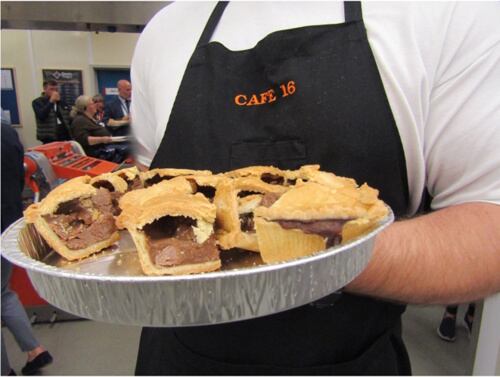
A disused kitchen at HMP Northumberland in northeast England has been transformed into expanded premises for The Oswin Project’s Baking Out commercial bakery.
The joint venture between the charity and prison operator Sodexo will help meet demand for Oswin bread, pies, quiches and cakes, while enabling the operation to extend its outside catering service and introduce additional lines.
The expansion will create up to 20 more training places, potentially taking the number of prisoners working across the prison’s catering enterprises to 30. Participants will gain food safety qualifications and learn specialist baking techniques intended to prepare them for employment after release.
“Through giving prisoners the opportunity to work and learn, underpinned by mentoring, we put a wedge in the revolving door of reoffending,” says Fiona Sample, CEO of The Oswin Project.
Sample says the organisation’s reoffending rate is 3%, compared with a national rate of 38%. She argues that expanding prison capacity without tackling the causes of reoffending is both expensive and ineffective, adding that Baking Out aims to create change “one loaf, one pie, one tray bake at a time”.
Oswin products are already sold at Café 16 inside HMP Northumberland and another Café 16 at Newcastle Cathedral. They’re also available from the prison farm shop, Lesbury Community Shop, The Alnwick Garden and Foxton Golf Club, with ingredients sourced locally wherever possible.
Big Day Cakes gives football fans another league to win

Big Day Cakes has turned the UK’s celebration cake aisle into an unlikely football battleground.
Every official football team Photo Cake purchased from a participating ASDA store earns one point for the featured club in the Big Day Cakes League. Purchases will be tracked during the 2026/27 Premier League season, with regular tables revealing which supporters are buying the most cakes.
The club at the top of the table at the end of the competition will receive the Big Day Cakes Cup and an official team photo cake. The concept gives consumers a reason to treat birthdays, football parties and other celebrations as opportunities to push their club closer to the title.
“Football fans love a league table and a bit of rivalry and everybody loves cake, so we thought we’d give them another competition to get behind this season,” says Colm Nohilly, MD of Big Day Cakes.
The company’s kiosks are installed in more than 350 ASDA stores across the UK. Shoppers upload an image, customise an officially licensed football design and select a plain cake, which the instore bakery completes in around 15 minutes.
A medium cake serving 22 costs £14.98, while a large cake serving 40 costs £19.98. Big Day Cakes is also developing an app for designing cakes remotely and a Connect printer system that could take its personalisation technology into more bakeries, retailers and venues internationally.
Ole & Steen puts its bakery secrets into print
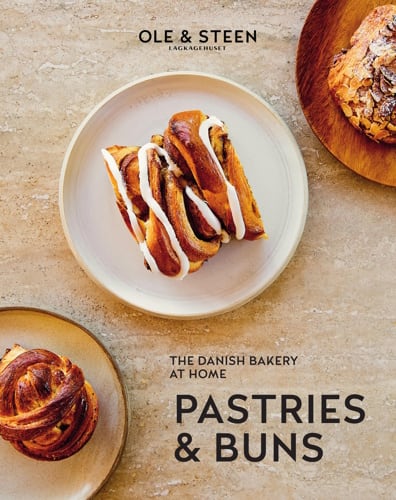
Ole & Steen is extending its reach beyond its bakery stores with the release of its first cookbook.
The Ole & Steen Cookbook contains 45 recipes, including the Danish bakery chain’s cardamom buns, Cinnamon Socials and Danish sausage rolls. More traditional recipes inspired by the company’s Danish heritage are also included.
Sharing the recipes behind signature products might once have appeared counterintuitive for a bakery business. Ole & Steen is instead using that familiarity to create another connection with customers, allowing them to bring the brand into their kitchens and attempt the bakes themselves.
The book also turns Ole & Steen’s recipes, heritage and reputation into a separate retail proposition that isn’t constrained by the location of its bakeries. It’s positioned as a Christmas gift for home bakers of varying experience levels, with an emphasis on Danish hygge, baking from scratch and sharing food.
The Ole & Steen Cookbook is available in the UK through the company’s website for £19.95.
good2grow sends one family to the Macy’s parade
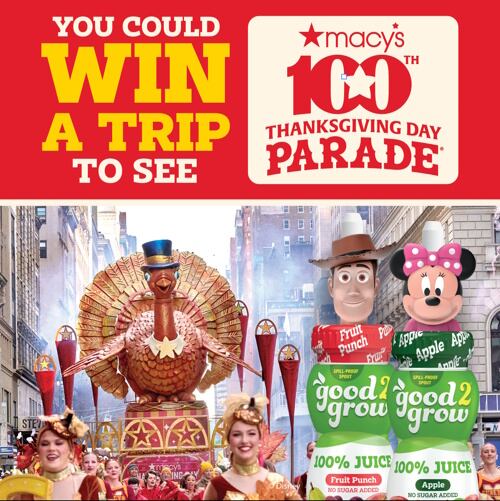
US children’s beverage and snack brand good2grow is using one of America’s biggest annual spectacles to connect with families away from the supermarket.
The company has become an official partner of the 100th Macy’s Thanksgiving Day Parade and is running a nationwide sweepstake that will send one family of four to New York for the centennial event on 26 November.
The prize includes return flights, hotel accommodation and four grandstand tickets at Macy’s Herald Square. Families can enter free of charge through the good2grow sweepstakes website until 31 October.
The initiative follows good2grow’s experiential partnership with Hot Wheels Monster Trucks Live and reflects its attempt to create memories that consumers associate with the brand, rather than relying solely on its products and collectible character tops.
“At good2grow, we’re always looking for meaningful ways to connect our fans to our brand beyond just our products,” says CEO Gunnar Olson. “Macy’s Thanksgiving Day Parade has been bringing families together for generations, making it a natural fit.”
The company’s snacks are sold nationally in the US through retailers including Target, Walmart, Kwik Trip, Walgreens and CVS.
Walker’s gives the Shivery Bite a royal connection
Walker’s Shortbread is attempting to turn a little-known piece of Scottish seaside culture into a new snacking occasion.
Its Wee Chunkies are bite-sized pieces of all-butter shortbread available in Triple Chocolate and Chocolate & Caramel. Unlike conventional packaged shortbread, they’re designed to be warmed before eating, releasing the aroma and warmth associated with biscuits arriving fresh from the oven.
Walker’s has linked the range to the ‘Shivery Bite’, which it describes as a Scottish custom of eating something warm and sweet immediately after emerging from a cold swim.
Research commissioned from OnePoll found that 68% of 2,000 UK consumers had never encountered the custom, although 36% identified the post-dip feeling as the best part of a beach visit. Almost one-quarter already included shortbread or biscuits among their seaside picnic essentials.
“Wee Chunkies are our way of sharing this cherished ritual with beachgoers across the UK who are missing out on enhancing one of their favourite seaside moments,” says Bryony Walker, commercial director at Walker’s Shortbread.
The range is available through the Walker’s website and in Waitrose and Sainsbury’s stores across the UK, with a recommended retail price of £2.50.
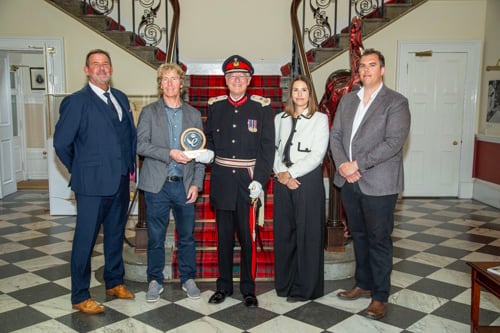
The launch also carries the weight of Walker’s increasingly prominent international and royal credentials. The 128-year-old family business received the 2026 King’s Award for Enterprise in International Trade in recognition of its sustained growth in global markets. It exports its Speyside-made products to almost 100 countries and supports more than 1,400 jobs in the Scottish Highlands.
Walker’s was also granted a Royal Warrant of Appointment from King Charles III in 2024 for supplying shortbread and oatcakes to the Royal Household. The distinction followed earlier Royal Warrants granted by Queen Elizabeth II and Queen Elizabeth The Queen Mother, giving a deliberately homespun Scottish ritual a particularly distinguished brand platform.
Snickers decides AI might be hungry
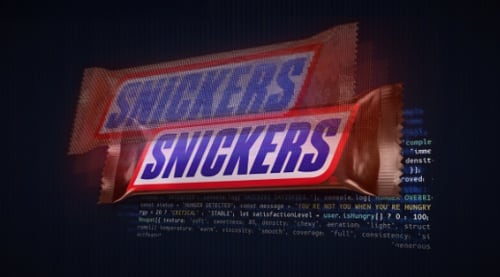
Snickers has reworked its enduring ‘You’re Not You When You’re Hungry’ campaign for one of marketing’s most crowded subjects: artificial intelligence.
Hungr.AI is described by the Mars-owned brand as the first digital candy bar created specifically for AI. Consumers who receive an unsatisfactory or inaccurate response from an AI assistant can visit the Snickers website, copy a digital Snickers and paste it into the same conversation.
The assistant then receives a prompt intended to produce a cleaner and more accurate response. The experience treats AI hallucinations as technological hunger moments, allowing Snickers to join the conversation around generative AI without abandoning the brand platform consumers already recognise.
Participants in the US can also visit Reddit or Snapchat through the Snickers website to claim a free physical bar while supplies last. The brand says the digital experience works particularly well with ChatGPT.
Hungr.AI doesn’t suggest that a digital chocolate bar can repair artificial intelligence. It turns a familiar advertising proposition into something consumers can actively use at the moment an AI assistant appears to stop making sense.
Cheez-It rebuilds the mall food court
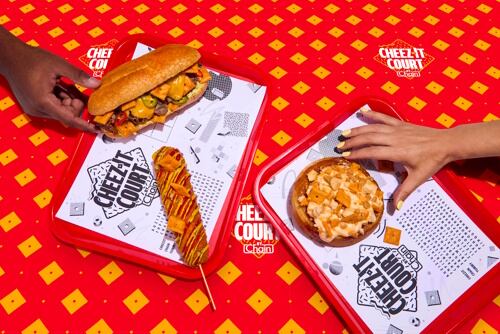
Cheez-It and pop-culture dining company Chain have opened the Cheez-It Court, a limited-time branded stall at Westfield Topanga Mall in Los Angeles.
The experience runs until 30 September and marks the first brand partnership during Chain’s six-month food court residency. The menu uses Cheez-It crackers and seasonings to reconstruct three familiar mall dishes rather than simply offering the packaged snack in a branded setting.
The Cheez-Y-Bun is a cinnamon roll topped with Cheez-It Extra Cheesy-seasoned cream cheese frosting, shortbread crumble, salted caramel crunch and a Cheez-It cracker.
The Crunchy Cheez-Dog coats a Wagyu hot dog in panko and crushed crackers before adding mustard, ketchup, pickle, Extra Cheesy crackers and another dusting of seasoning. The Cheez-Steak combines sliced ribeye, American cheese, grilled onions and pickled jalapeños in a toasted, Cheez-It-seasoned hoagie roll, finished with dill pickle aioli and a Hot & Spicy cracker and chive crumble.
“The debut of the Cheez-It Court combines our beloved snack, made with 100% real cheese, with the unmistakable nostalgia of food court classics,” says Nicole Sorensen, VP of marketing for Cheez-It.
The Los Angeles installation follows experiential activations including the Cheez-In Diner and Studio Cheez. Recipes for the three dishes will be released on the Cheez-It website, allowing consumers outside California to recreate the food court menu at home.
Cadbury and MCoBeauty make beauty good enough to eat
Cadbury Dairy Milk has entered unfamiliar territory down under through a limited-edition collaboration with cosmetics business MCoBeauty.
The centrepiece is a 180g Cadbury Dairy Milk block containing a flowing, hot-pink, watermelon-flavoured fondant centre. The product takes its inspiration from the colours, fragrances and flavour cues associated with MCoBeauty’s watermelon beauty products, effectively translating a cosmetics identity into something consumers can eat.
A complementary 180g gift box contains a mixture of classic Dairy Milk chocolates and pieces filled with the watermelon-flavoured centre. The watermelon chocolate block is made in Tasmania using local and imported ingredients and is available exclusively through Woolworths in Australia. The retailer confirms the limited-edition bar combines Cadbury Dairy Milk chocolate with a hot-pink watermelon fondant centre.
The collab also moves in the opposite direction. MCoBeauty has created Cadbury-inspired cosmetics, including a Dairy Milk peptide lip treatment and a limited-edition Cadbury Icons Makeup Box. The lip treatment contains peptides and shea butter and is designed to evoke the confectionery brand while remaining unmistakably cosmetic rather than edible.
The crossover gives both brands permission to appear outside their usual aisles, while its collision of chocolate and cosmetics provides the curiosity required to command attention online.
McVitie’s borrows from Flipz to crack China

McVitie’s is moving beyond the biscuits that made it famous as owner pladis pursues its ambition to transform the British name into a £1bn global brand.
The company has launched McVitie’s Flipz in China, combining the McVitie’s identity with Flipz’s chocolate-coated pretzel format. The range comes in matcha honey, lemon Basque cheesecake and chocolate hazelnut flavours, with the pretzels made in a smaller, bite-sized format to reflect Chinese snacking habits.
Rather than exporting an existing European product, pladis has tailored the flavours, portions, manufacturing and sales channels to the Chinese market. The initial rollout covers Shanghai and Guangzhou, with the range sold through Tmall, JD.com and Douyin, as well as Costco, Metro, RT-Mart, Yonghui, Lawson and FamilyMart.
Expansion into additional Chinese cities is planned for 2027.
“China is one of the world’s most exciting snacking markets,” says David Murray, chief commercial officer at pladis. “We’ve developed this range around local tastes and shopping habits because we believe long-term success comes from understanding what consumers want, not simply exporting products that work elsewhere.”
China’s sweet biscuit market is worth approximately £5bn and has grown at a compound annual rate of 5.6% over the past decade, according to pladis. It’s the world’s third-largest biscuit market, behind the US and slightly behind Brazil.
The decision to combine two established brands in a locally developed product reveals how pladis expects McVitie’s to reach its next stage of growth. Its international future won’t be built solely on exporting more Digestives, but on stretching the McVitie’s name into new formats that feel as though they belong in the markets in which they’re sold.


