


Smucker’s Hostess purchase: overview
- Smucker’s shelf-stable supply chain has struggled to handle Hostess’s 65-day shelf life and convenience-store-heavy distribution
- Nearly $3 billion in impairment charges and sustained sales declines have brought activist investor Elliott onto the board and pushed out the COO
- Early signs of stabilisation, alongside Uncrustables’ billion-dollar milestone, suggest Smucker’s execution problem is fixable, but not yet fixed
JM Smucker closed its purchase of Hostess Brands in November 2023, paying roughly $5.6 billion in cash and stock for Twinkies, Ding Dongs and Donettes. CEO Mark Smucker marked the moment on stage at an industry conference, biting into a Twinkie and declaring it “tastes like growth”.
Three years on, Smucker has booked close to $3 billion in impairment charges across three separate quarters, brought an activist investor onto the board, pushed out a chief operating officer and watched sales decline for six straight quarters in the division built around Hostess.
A Twinkie has a shelf life of about 65 days, even though Smucker didn’t plan around that fact. Smucker’s legacy products – Jif, Folgers, the jams the company is named for – sit on shelves for a year or more. Running a fast-turning, short-dated snack line through a supply chain built for pantry staples meant faster distribution, tighter production scheduling and far less room for error on inventory, and when the timing slipped, product went straight to waste rather than the discount bin.
Smucker also split its Hostess sales teams by channel, separating employees who sold to grocery stores from those handling convenience stores, despite convenience accounting for roughly 40% of Hostess sales, a channel Smucker had little experience in before the deal.
TD Cowen analyst Rob Moskow described it to the Wall Street Journal as “a different customer, consumption dynamic, an entirely different route to market” that Smucker “wasn’t prepared for”. The split made total demand harder to forecast, and Hostess lost shelf space and display slots to competitors as a result.
Smucker has written down the value of the Sweet Baked Snacks business three times now, in roughly year-long intervals since the deal closed, with the charges adding up to close to $3 billion against a $5.6 billion purchase price. Its stock has fallen 14% since the acquisition was announced, and the Hostess-anchored division’s sales are still sliding.
Some of that reflects a broader pullback in discretionary snacking, plus early effects from GLP-1 drugs, which Smucker says haven’t been material so far. But the Ohio-headquartered company’s own filings point mainly to distribution gaps and merchandising missteps, describing “sustained challenges in the sweet baked goods category”.
Enter Elliott

Activist investors don’t typically show up at food companies posting steady growth. Elliott Investment Management’s involvement built gradually, from pressure into a formal information-sharing agreement. And in February 2026, Smucker added two Elliott-backed independent directors – Bruce Chung, CFO of NRG Energy, and David Singer, the former CEO of Snyder’s-Lance – expanding the board to 11 members.
Elliott partner Marc Steinberg framed the appointments as “critical steps toward ensuring” the company reaches its potential, the sort of activist-investor language that reads, between the lines, as “we’re watching”.
The same month, Smucker eliminated its chief operating officer role entirely, with president and COO John Brase exiting the company.
CEO Mark Smucker absorbed the president title himself, and CFO Tucker Marshall picked up direct oversight of frozen handheld and spreads, sweet baked snacks and international – a consolidation that put the Hostess turnaround squarely on the desk of the finance chief.
That’s a notable structural signal for anyone watching how the industry handles distressed snack integrations: when the CFO starts running the P&L for the trouble spot, it usually means the board wants tighter financial discipline over strategy, not more of it.
Green shoots or just easier comparisons?
To be fair to Smucker, the company hasn’t just been absorbing punches. It’s cutting Hostess’ item count by roughly a quarter, scaling back promotional spend and building a dedicated Sweet Baked Snacks sales organisation, effectively undoing the earlier decision to keep grocery and convenience separate. That discipline showed up modestly in the fiscal fourth quarter, when segment profit jumped 45% even as sales dipped slightly, with higher pricing and leaner marketing spend picking up the slack.
It’s the first real profit uptick the division has posted since the deal closed, though the comparison flatters easily against a year earlier that was weighed down by impairment charges, so it’s worth reading as an early signal rather than a victory lap.
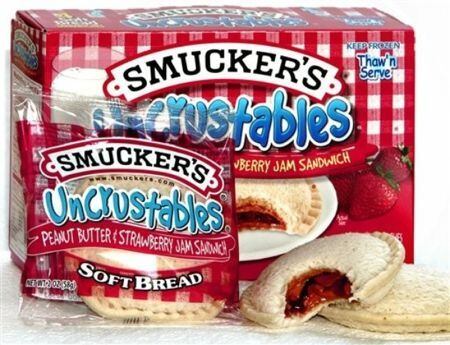
Hostess isn’t the only measure of Smucker’s execution, though. Uncrustables, the frozen crustless-sandwich brand that barely registered as a headline product a decade ago, crossed $1 billion in annual sales this past fiscal year, a genuine rarity in packaged food, where billion-dollar brands are usually decades-old legacy names rather than something built largely in-house. Coffee pricing across Folgers and Dunkin’, plus growth in away-from-home channels, helped the wider company beat Wall Street’s earnings expectations for the quarter too.
Smucker built Uncrustables from a modest add-on into a billion-dollar brand largely through steady distribution expansion, a shelf-stable, single-format, factory-controlled product it clearly knows how to scale. Hostess, by contrast, is perishable, multi-format and route-heavy, and Smucker’s operating playbook hasn’t yet caught up to that difference.
The company’s own guidance for the year ahead adds a note of caution rather than triumph. Smucker expects sales to decline slightly in fiscal 2027, largely as coffee prices ease off a high base, even as it guides earnings higher on cost discipline, pricing and continued debt paydown. That near-term profit story depends more on squeezing margin than growing volume, which puts even more pressure on Hostess specifically to start contributing top-line growth rather than just smaller losses.
A cautionary tale for consumer goods dealmakers

The Smucker-Hostess saga is becoming something of a case study in what happens when a shelf-stable packaged-goods giant acquires a perishable, high-velocity product line: distribution networks, sales structures and inventory systems built for annual turns simply don’t translate to a 65-day shelf life.
It’s also a reminder that “tastes like growth” lines age about as well as a Twinkie left past its use-by date. Ownership churn for Hostess was already the subject of speculation back in 2023, before Smucker even closed the deal, and the current stabilisation effort will need more than one good quarter to prove it’s a genuine fix rather than a stay of execution.
There’s a broader lesson here for any consumer goods company eyeing an acquisition outside its core competency: category adjacency on paper doesn’t guarantee operational compatibility on the ground.
Smucker and Hostess both sit under the broad ‘packaged food’ umbrella, and the strategic logic – pairing a slow-turn pantry portfolio with a fast-growing snacking brand in a category investors reward for stability – was sound enough that Wall Street applauded the deal at signing. What the thesis missed was execution risk at the supply-chain layer, the part of a deal that rarely makes it into the press release.
Expect that to weigh on how food and beverage M&A gets pitched and underwritten going forward: acquirers, and the banks advising them, are likely to ask sharper questions about shelf life, route-to-market overlap and channel expertise before signing off on the next ‘growth’ narrative.
Hostess has already changed ownership multiple times this century, including bankruptcy filings in 2004 and 2012, long before Smucker bought it in 2023. A company mid-restructuring, under sustained activist pressure, with a newly reshuffled C-suite doesn’t fit the usual profile of a long-term brand steward.
With Elliott now inside the boardroom and Tucker Marshall running point on the turnaround, the next two quarters of results will show whether Smucker has actually fixed its shelf-life problem or just gotten better at managing the story around it.


