


What Earthnutz’s startup journey reveals
- Turning one raw material into two consumer products can retain more value and reduce manufacturing waste
- Scaling an unfamiliar snack requires consistent texture, reliable production and clear communication at shelf
- Protein, fibre and zero-waste claims need robust testing, careful wording and continued verification
Peanuts rarely receive much credit for versatility. In the UK, they’re typically sold salted, coated, blended into butter or added to confectionery, leaving much of their wider culinary potential overlooked.
Earthnutz wants to change that. The London-based startup presses peanuts to extract virgin peanut oil before turning the remaining protein-rich kernel into savoury crisps. Both outputs become branded consumer products, allowing the company to generate value from the entire raw material.
The proposition combines several prominent food industry trends: functional snacking, minimally processed cooking oils, circular manufacturing and rising interest in protein and fibre. It also requires Earthnutz to introduce two unfamiliar products and establish where they belong on shelf.
Founder Abby Singh knows that being difficult to categorise can attract attention, but it can also make a young brand harder to explain. “When you don’t fit the mould, it’s both your biggest strength and, simultaneously, your biggest struggle,” she says.
How a Bolivian soup changed the brief
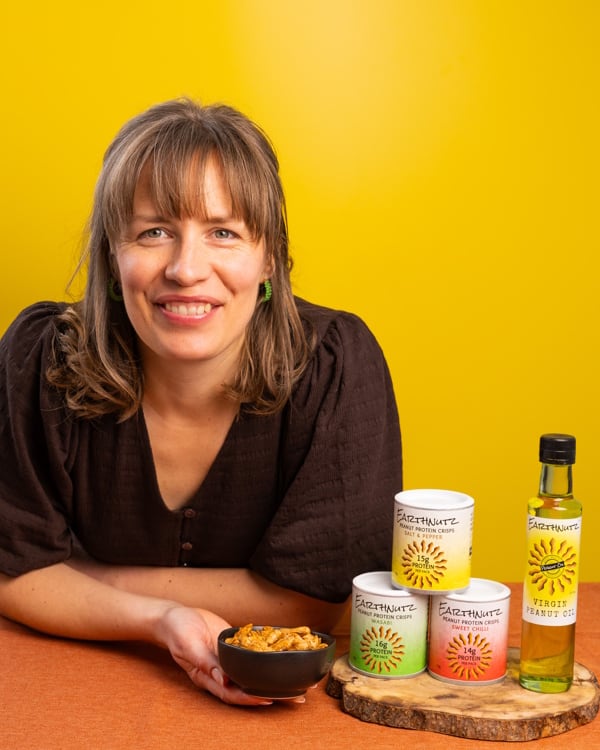
Singh’s view of peanuts was shaped by a trip to South America, where she spent time living with a host family in Bolivia while learning Spanish.
“The mother of the family was keen to share Bolivian culture and cooked a sopa de maní, or peanut soup, one evening,” she says. “This was the first time I’d experienced peanuts as an ingredient and it was absolutely delicious. It really shaped the way I saw peanuts and their possible culinary uses.”
The experience showed Singh that peanuts could offer far more than the familiar formats found in British supermarkets. Across Latin America, they’re used to add flavour, richness and body to savoury dishes rather than being confined to snacks and spreads.
Earthnutz carries that thinking into its production model. Singh describes the pressing process as “juicing a peanut”: the oil is separated from the kernel, after which the remaining material is transformed into Peanut Protein Crisps.
The model turns the peanut into two consumer products rather than leaving part of the raw material unused. Virgin Peanut Oil is positioned as a flavourful cooking oil for shoppers seeking alternatives to more heavily refined options, while the crisps target consumers who want familiar savoury crunch alongside higher levels of protein and fibre.
“There simply weren’t any snacks that gave you that irresistible crunch of a crisp, alongside truly impressive nutrition,” says Singh. “In nature and on shelf, very few foods are both high protein and high fibre, despite these nutrients having such a big impact on our wellbeing, especially as we age.”
According to Earthnutz, its crisps contain between 14g and 16g of protein per pack, along with 16% to 20% of the reference intake for fibre. Available in salt and pepper, sweet chilli and wasabi flavours, they’re designed to compete on enjoyment as well as nutrition.
However, while strong nutritionals may persuade shoppers to try an unfamiliar product, they won’t secure repeat purchases if the texture disappoints. Singh says one of the most difficult development tasks was achieving a “shatteringly good crisp-like texture” while maintaining the nutritional profile and avoiding ingredients such as MSG and potassium chloride.
Consistency created another hurdle. A recipe that works in small batches can change significantly when it moves onto larger equipment, where variations in raw materials, temperature, pressure and throughput become more difficult to control. “It was a huge challenge to create a process that’s replicable and consistent at scale. It took lots of trial and error, creativity, advice and patience.”
Achieving that consistency is central to making the model commercially viable. Unless the products can be manufactured reliably, at the required quality and at a workable cost, using the entire peanut won’t necessarily translate into a scalable business.
Making zero waste commercially viable

Turning both the oil and kernel into food supports Earthnutz’s zero-waste positioning and follows the principle of retaining as much value as possible from a raw material.
Circular economy and climate action NGO WRAP places waste prevention at the top of its food waste hierarchy. Keeping edible material within the human food chain is prioritised ahead of sending it to animal feed, recycling, composting or disposal.
Singh says building a value-driven company can be difficult when its approach differs from established category practices. “The hardest lesson I’ve learned as a food startup founder has been creating a value-driven business when it often flies against the norms of the industry and category. When you don’t fit the mould, it’s both your biggest strength and, simultaneously, your biggest struggle.”
The unusual format can help Earthnutz stand out, but it also means explaining an unfamiliar product quickly enough to secure attention from retailers and consumers. Retail buyers need to understand where it belongs, while shoppers must grasp its format, flavour, nutritional value and sustainability credentials within seconds.
“It’s difficult when you have to both educate and sell in the same moment – especially when you have very little time to get the message across,” says Singh.
Growing interest in functional snacking could make that explanation easier. Protein has moved beyond sports nutrition, while fibre is receiving greater attention from brands and consumers. Even so, Earthnutz must persuade shoppers that a peanut crisp is enjoyable before asking them to absorb the production story behind it.
Many startups introducing formats that don’t fit neatly within an established segment face the same difficulty. Novelty may secure an initial discussion with a buyer, but the product still needs to communicate a clear consumption occasion and a compelling reason to return.
Big claims bring bigger responsibilities
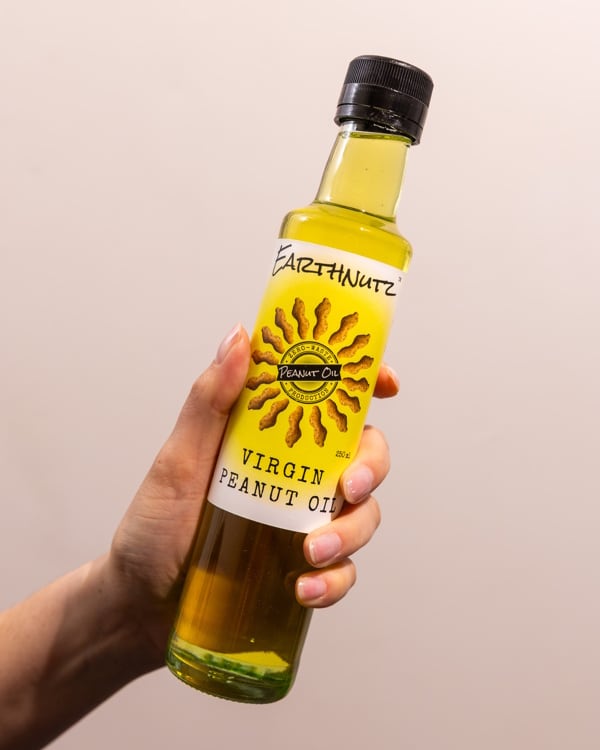
Terms such as ‘high protein’, ‘high fibre’ and ‘zero waste’ can give a small brand valuable shelf presence, but each needs evidence behind it.
Under the rules applying in Great Britain, a product can only claim to be high in fibre when it contains at least 6g of fibre per 100g. A high-protein claim requires at least 20% of the food’s energy value to come from protein. Earthnutz says both claims have been verified through product laboratory testing.
Changes to the formulation, raw-material supply or production process could affect whether the finished product continues to meet those thresholds, making further testing important as manufacturing scales.
Peanuts bring another responsibility because they’re one of the UK’s 14 regulated allergens. Any manufacturer handling them needs clear labelling, effective segregation, validated cleaning procedures and controls to manage cross-contact. These requirements can limit the pool of suitable production partners and influence where other products can be made within the same facility.
The zero-waste claim requires similar care. Using both the oil and kernel supports Earthnutz’s proposition, but the company must be able to explain precisely what has been prevented from becoming waste. The claim shouldn’t imply wider environmental benefits that haven’t been measured.
Singh advises founders to take advantage of the food startup community without allowing enthusiasm to overtake commercial discipline. “Never underestimate the agility and creativity of a startup. Attend webinars, network, ask questions – there’s no such thing as a dumb question – and have a really good look at your numbers before diving in.”
Earthnutz will need both qualities as it moves from product development into wider commercial growth. The startup has found a novel way to create two products from one familiar ingredient, but its next challenge is persuading retailers and shoppers that both deserve a place in their respective categories.