


Key takeaways:
- The SpaghettiOs case suggests consumers are increasingly acting as informal fact-checkers, scrutinising food safety claims online long before courts reach a verdict.
- Unlike controversies involving Daily Harvest, Panera’s Charged Lemonade and WanaBana, much of the online debate has focused on the credibility of the allegations rather than criticism of the manufacturer.
- For food brands, the reputational battle increasingly begins in comment sections and social media feeds, not courtrooms.
A lawsuit filed against Campbell and Walmart over allegations that a can of SpaghettiOs contained moving worm-like organisms may ultimately be decided in court. But if online reaction is any indication, many consumers have already begun reaching conclusions of their own.
That, perhaps, is the most interesting aspect of the case.
Food manufacturers have long understood the reputational risks that accompany contamination allegations, recalls and food safety scares. What’s changing is who now participates in the discussion. Consumers are no longer simply reading headlines and waiting for investigators, regulators or judges to establish the facts. Increasingly, they are dissecting claims themselves, scrutinising evidence, debating scientific plausibility and, in many cases, acting as informal fact-checkers.
The SpaghettiOs dispute illustrates just how quickly that process can unfold.
Within hours of national media coverage appearing, online commentators were debating everything from commercial canning processes and food safety regulations to the credibility of the allegations themselves. Some wanted to see the videos referenced in the court filing. Others questioned whether parasites could survive the temperatures and pressures involved in commercial canning. The legal process may only be beginning, but public scrutiny is already well underway.
The internet has become food safety’s unofficial fact-checker

Food contamination complaints are nothing new. Every year, manufacturers face consumer complaints, lawsuits, recalls and regulatory investigations involving foreign materials, allergens, spoilage and microbiological hazards. What’s different today is how consumers respond.
Social media platforms, online forums and comment sections have created spaces where food safety claims can be analysed in real time by thousands of people. While few possess specialist expertise, that hasn’t stopped consumers from examining timelines, discussing manufacturing processes, comparing evidence and challenging narratives.
The result is that food safety disputes increasingly play out in two arenas simultaneously: the courtroom and the court of public opinion.
The SpaghettiOs case appears to be a textbook example. Much of the online discussion has focused not on Campbell or Walmart, but on the allegations themselves. Commenters have questioned whether the claims are scientifically plausible, scrutinised details contained in news reports and debated whether enough evidence has been made public to support the allegations.
None of those discussions will determine the outcome of the case; a judge will do that. Yet they highlight an important shift in consumer behaviour: people are no longer waiting for official conclusions before deciding what they believe.
Sometimes the internet prosecutes the brand; sometimes it doesn’t

In 2022, meal-kit company Daily Harvest found itself at the centre of a growing online storm after consumers reported severe illnesses linked to its French Lentil + Leek Crumbles product. Customers shared symptoms, hospitalisations and medical experiences across social media, fuelling scrutiny of the brand before investigators identified tara flour as the likely source of the illnesses. Daily Harvest ultimately recalled the product and later reached settlements with affected consumers.
A year later, Panera Bread faced intense public scrutiny following lawsuits alleging its highly caffeinated Charged Lemonade beverage contributed to deaths and serious health incidents. Social media users dissected caffeine levels, warning labels and marketing claims, while critics questioned whether consumers fully understood the product’s potency. Panera discontinued Charged Lemonade in 2024, although the company maintained the product was safe when consumed as intended.
The lead contamination crisis involving WanaBana fruit puree pouches followed a similar pattern in late 2023. After dozens of children were found to have elevated blood-lead levels linked to the products, parents, healthcare professionals and consumer advocates took to social media to share information and raise concerns, increasing pressure on manufacturers and regulators alike.
In each of these cases, much of the online scrutiny focused on the manufacturer and its actions.
The SpaghettiOs dispute appears to be unfolding differently. Rather than immediately condemning Campbell, many online commentators have focused on the credibility of the allegations. Some have questioned the science; others have questioned the timeline. Many have called for additional evidence before drawing conclusions.
Had public opinion swung the other way, Campbell could have found itself confronting a very different reputational challenge.
Why food companies should pay attention

None of this suggests that online commentators should replace food scientists, regulators or the courts. Public opinion can be wrong. Internet debates often rely on incomplete information, assumptions and speculation. Formal investigations exist for a reason.
Yet food manufacturers cannot ignore what is happening. Whether fair or not, public perceptions often begin forming long before legal proceedings conclude. For brands built on decades of consumer trust, those perceptions can matter almost as much as the eventual outcome of a case.
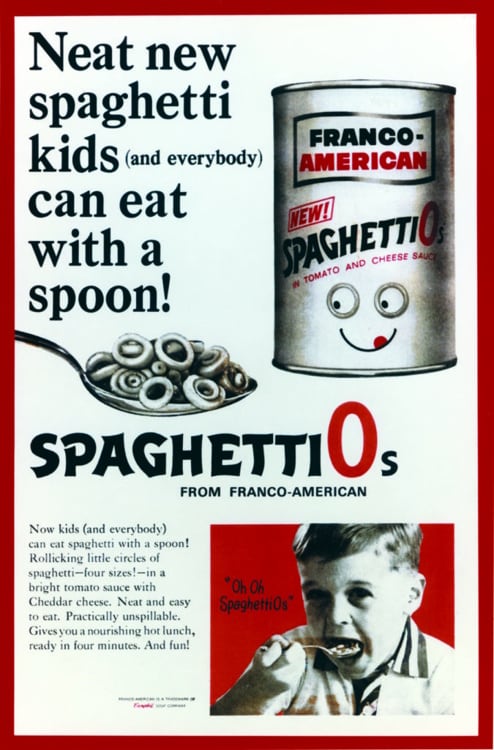
SpaghettiOs is one such brand. Introduced in 1965 as the world’s first ‘spoonable spaghetti’, it has spent six decades building familiarity with American consumers. That history helps explain why allegations involving the product generate attention far beyond the courtroom.
The broader lesson extends well beyond a single brand or a single lawsuit. Food safety disputes are increasingly being judged in multiple places at once – by courts, regulators, journalists and consumers scrolling through comment sections on their phones.
Peeling back the lid of the SpaghettiOs case
The case centres on a can of Campbell’s SpaghettiOs purchased from a Walmart Supercenter in Okeechobee, Florida, in June 2024.
According to a complaint filed in the US District Court for the Southern District of Florida, Mary Hubbard and her minor daughter had consumed portions of the canned pasta before Hubbard allegedly discovered what appeared to be worms or parasites moving within the food.
The complaint claims Hubbard recorded videos of the alleged contamination and that both she and her daughter later required medical treatment, including treatment for alleged parasitic infections.
The family is seeking damages from Campbell Soup Company, Campbell Soup Supply Company, Walmart Inc. and Wal-Mart Stores East LP under claims including negligence, strict liability and breach of implied warranty. The complaint also alleges violations of US food safety law.
Campbell says it believes the claims are without merit and intends to vigorously defend against them. Walmart has said it is reviewing the complaint and will respond appropriately in court. The claims haven’t been tested in court.
Cases:
Mary Hubbard et al. v Campbell Soup Company et al., US District Court, Southern District of Florida, filed 2 June 2026. No. 2:26-cv-14196.
Peni et al. v Daily Harvest, Inc. et al., US District Court, Southern District of New York, filed 28 June 2022. No. 1:22-cv-05443. Litigation arose from illnesses linked to Daily Harvest’s French Lentil + Leek Crumbles product, which was recalled in June 2022 following reports of severe adverse health effects associated with tara flour. The parties later reached settlement agreements.
Estate of Sarah Katz v Panera Bread Company, Court of Common Pleas of Philadelphia County, Pennsylvania, filed 23 October 2023. The lawsuit alleged Panera’s Charged Lemonade contributed to the death of a 21-year-old University of Pennsylvania student. The parties reached a confidential settlement in 2024. Panera discontinued Charged Lemonade the same year while denying wrongdoing.
David Brown and Denise Fuller v Panera Bread Company, Superior Court of Delaware, filed 4 December 2023. No. N23C-12-001 JRJ. The wrongful death complaint alleged Panera’s Charged Lemonade contributed to the death of Dennis Brown. Litigation became one of several high-profile cases involving the beverage.
In re WanaBana Apple Cinnamon Fruit Purée Products Litigation, multiple actions filed following the 2023 recall of WanaBana, Schnucks and Weis cinnamon apple purée products linked to elevated blood-lead levels in children. Litigation remains ongoing in various jurisdictions following the nationwide recall and subsequent investigations.


