


Key takeaways:
- Scale still wins: The world’s biggest snack brands combine global reach, massive distribution networks and deep marketing budgets that smaller rivals struggle to match.
- Innovation and premiumisation pay off: Brands such as Doritos and Lindt continue to grow value by constantly refreshing their portfolios and giving consumers reasons to trade up.
- Consumers want balance, not extremes: Shoppers may be eating more health consciously, but they’re still making room for trusted treats, indulgence and familiar brands.
I’ve spent enough time at food trade shows over the past few years to conclude that the future of snacking is supposed to be healthy.
Walk the aisles of any major industry event and you’ll find protein-packed bites, gut-friendly crackers, adaptogenic bars, reduced-sugar cookies and snacks promising everything from better sleep to improved focus. Conversations inevitably turn to wellness, clean labels, ultra-processed foods (UPFs) and the growing demand for products that feel more natural, local and functional.
The trend is real. Consumers are paying closer attention to ingredients, questioning long ingredient lists and seeking foods that align with their health goals. Governments are scrutinising UPFs, retailers continue to expand private-label offerings and manufacturers are investing heavily in reformulation and functional ingredients.
Which is why the latest brand rankings are so fascinating.
Because while the industry talks increasingly about health, some of the world’s biggest snack brands continue to get stronger.
According to Brand Finance, Lay’s is now worth an estimated $12.7bn, making it the second most valuable food brand in the world behind only Nestlé. Doritos has climbed to $5.4bn after growing 16% year-on-year. Lindt’s brand value increased 14% to $4.9bn, earning it a place among the world’s top 10 food brands. Collectively, Brand Finance estimates the world’s 100 most valuable food brands are worth more than $250bn.
The world’s most valuable snack brands
Lay’s: $12.7bn, making it the second most valuable food brand in the world behind Nestlé
Doritos: $5.4bn, up 16% year-on-year
Lindt: $4.9bn, up 14% and now among the world’s top 10 food brands
Cadbury: One of the world’s most valuable confectionery brands and a top 15 global food brand
Oreo: The world’s leading cookie brand, sold in more than 100 countries
Kinder: One of the world’s largest confectionery brands, available in more than 170 markets
The rankings raise an obvious question: if healthier eating is becoming more important, why are some of the world’s biggest snack brands becoming even more valuable?
The answer offers 7 lessons for the rest of the industry.
1. Scale still matters

The first lesson is perhaps the least fashionable.
At a time when much of the industry celebrates niche brands and local authenticity, scale remains one of the biggest competitive advantages in food.
Lay’s is sold in more than 200 countries and territories. Oreo is available in more than 100 countries. Kinder products reach consumers in more than 170 markets. These brands benefit from enormous distribution networks, deep retailer relationships and marketing budgets that smaller competitors simply cannot match.
PepsiCo, owner of Lay’s, Doritos, Cheetos and Ruffles, generated more than $91bn in net revenue in 2024; Mondelez International, owner of Oreo and Cadbury, generated approximately $36bn; Ferrero Group’s revenues exceeded €18bn. Together, those three companies generated well over $145bn in annual sales.
But these revenues don’t just buy advertising: they buy distribution. Frito-Lay North America alone generated more than $24bn in net revenue in 2024 and accounted for approximately 43% of PepsiCo’s operating profit, helping fund the networks that place products in supermarkets, convenience stores, airports, vending machines, entertainment venues and increasingly online channels.
While scale doesn’t guarantee success, it certainly helps.
2. Global brands can still feel local

One of the most common criticisms of global food brands is that they lack local relevance. The biggest snack brands have spent years proving otherwise.
Lay’s may be recognised around the world, but its flavour strategy is intensely local. Consumers in India encounter Masala variants, while shoppers in parts of Asia have seen flavours inspired by seaweed and regional cuisines. The same brand adapts itself repeatedly without losing its identity.
Oreo follows a similar approach. Sold in more than 100 countries, the world’s leading cookie brand has launched everything from green tea variants in China to blueberry-inspired products in Asia and countless market-specific limited editions elsewhere.
The lesson is clear: consumers increasingly want local experiences, but they don’t necessarily require local brands.
3. Innovation still drives growth
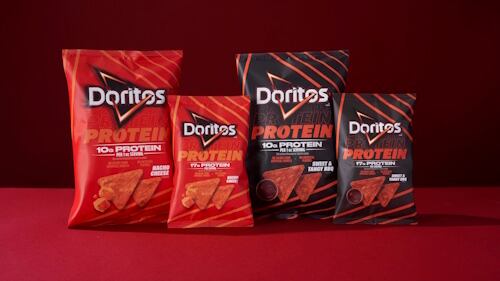
Doritos provides perhaps the best example of why innovation remains one of the most powerful growth levers in snacking.
Brand Finance estimates the PepsiCo-owned tortilla chip brand is now worth $5.4bn after increasing its value by 16% year-on-year, making it one of the fastest-growing major food brands globally. That performance comes as PepsiCo continues to invest heavily in keeping its snack portfolio fresh, spending approximately $894m on research and development in 2024.
Doritos has been one of the biggest beneficiaries of that investment. The brand has expanded its Dinamita rolled tortilla chip platform from a niche US launch into an international growth vehicle, while continuing to build on the success of Flamin’ Hot and using gaming, esports and major sporting partnerships to remain culturally relevant.
Oreo follows a similar playbook. The Mondelez-owned brand sits at the centre of a business that generated approximately $36bn in revenue last year and spent around $1.2bn on consumer-facing marketing. Collaborations with Coca-Cola, Pokémon and Lady Gaga, alongside a steady stream of seasonal and market-specific launches, have helped keep the century-old cookie relevant to new generations.
So, the lesson here isn’t simply that new products matter. It’s that the biggest snack brands have turned innovation into a system.
4. Premiumisation proves indulgence isn’t going away

Conventional wisdom suggests consumers become more price-sensitive during periods of economic uncertainty. Yet some of the strongest-performing snack brands have moved further upmarket.
Lindt’s brand value increased 14% to $4.9bn in the latest rankings despite one of the most turbulent periods the chocolate industry has faced. The Swiss chocolatier generated CHF5.47bn ($6.8bn) in sales in 2024, achieving 7.8% organic growth even as cocoa prices surged above $12,000 per tonne at points during the year.
Yet consumers keep buying, which reflects a broader trend. Ferrero’s revenues have climbed above €18bn, driven in part by premium brands such as Ferrero Rocher and Kinder. Meanwhile, premium Cadbury gifting formats continue to attract shoppers looking for affordable luxuries.
Consumers may postpone larger purchases, but many still seek small moments of indulgence.
5. Heritage and emotional connection still matter

For years, food manufacturers worried that younger consumers would abandon legacy brands in favour of newer challengers.
That hasn’t happened. Cadbury traces its roots back to 1824; Oreo has been around since 1912; Lay’s dates back to the 1930s. Yet all three remain among the world’s most recognised snack brands.
Rather than viewing heritage as a constraint, successful brands have turned it into a competitive advantage. Longevity creates trust, familiarity and emotional connection – qualities that become increasingly valuable in crowded categories.
Consumers don’t simply buy Oreo cookies or Cadbury chocolate. They buy comfort, nostalgia and shared experiences. Kantar’s BrandZ methodology, built on more than 4 million consumer interviews across thousands of brands globally, consistently identifies meaningful difference and emotional connection as among the strongest predictors of long-term brand growth.
That’s a difficult advantage for newer brands to replicate.
6. The best brands own multiple occasions

Snack brands increasingly compete for occasions rather than categories.
Doritos has become synonymous with gaming and social gatherings. Oreo spans lunchboxes, desserts and seasonal promotions. Kinder operates across snacks, treats and gifting occasions. The more occasions a brand can own, the more resilient it becomes.
This is particularly important as traditional meal patterns continue to fragment. Industry researchers have increasingly documented the rise of snacking occasions throughout the day, creating more opportunities for brands capable of stretching beyond a single use case.
As such, the strongest brands no longer compete for shelf space alone; they’re competing for moments.
7. Consumers want both health and treats

This may be the most important lesson of all and comes back to the paradox. The more I look at these rankings, the less I think they’re about crisps, chocolate or biscuits. They’re about how consumers actually behave.
The same shopper who buys a protein bar after the gym may also pick up a bag of Lay’s for a family barbecue. The consumer looking for cleaner labels might still choose a favourite chocolate brand as a weekend treat.
For years, the industry has framed health and indulgence as competing forces. But most consumers don’t appear to see it that way. And neither do the world’s biggest snack brands. They aren’t thriving because health no longer matters; they’re thriving because consumers have become remarkably good at balancing multiple priorities at once.
So, while health matters, so do taste, convenience, trust, affordability and enjoyment.
The future of snacking may well be healthier. But if the rankings tell us anything, it’' that the future still belongs to the brands that understand consumers are rarely looking for one thing alone.


