


Key takeaways:
- Sweet bakery has evolved from an everyday indulgence into a form of soft luxury, with consumers using pastries and desserts as affordable status symbols and emotional rewards.
- The world’s most successful bakeries are borrowing tactics from fashion, fragrance and hype culture, including limited drops, signature products, experiential retail and scarcity-driven demand.
- Social media, nostalgia and wellness positioning are reshaping sweet bakery into one of the most emotionally and culturally powerful categories in food.
Consumers don’t treat sweet bakery purchases the way previous generations did. Pastries, cookies and laminated desserts have evolved from everyday indulgences into cultural objects tied to aspiration, aesthetics and emotional self-reward. A pistachio croissant from the right bakery carries some of the same social currency once associated with designer accessories, premium cocktails or impossible-to-book restaurants.
That mindset has changed the economics of the category.
Consumers who hesitate over larger luxury purchases will still spend freely on high-end bakery as the products occupy a psychologically comfortable sweet spot: indulgent enough to feel rewarding, but still inexpensive enough to justify impulsively. Sweet bakery has effectively become soft luxury.
Social media has intensified the shift, with consumers encountering pastries first as images, textures and status markers rather than food. Cross-sections, laminated layers, glossy glazes and exaggerated fillings have become commercial assets in their own right, instantly communicating abundance, craftsmanship and escapism.
In many ways, the modern pastry cabinet now operates like a fashion storefront. Products are styled to project excess, indulgence and aesthetic identity as much as flavour. Contemporary bakeries increasingly resemble luxury fragrance boutiques or designer concept stores, carefully curated around visual drama, tactile experience and emotional atmosphere, while consumers are invited to buy participation in a mood, a space and a version of themselves as much as something to eat.
None of this is really about cake.
Sweet bakery has morphed into one of the most emotionally charged categories in food, delivering something consumers feel increasingly starved of elsewhere: comfort, escapism, status, atmosphere and tiny moments of reward that still feel financially achievable.
In an economy where home ownership feels almost impossible, luxury retail feels increasingly out of touch and traditional status symbols are slipping further beyond reach, consumers are redirecting desire into smaller, more emotionally immediate luxuries. The £6 pastry became recession-era jewellery.
But the real story isn’t simply growth – it’s emotional positioning. And savvy bakery brands know it. Grand View Research values the global bakery products market at $495.6bn in 2023, with it tipping over the $700bn mark by 2030. That’s a lot of dough.
Aspirational living for consumers locked out of luxury culture

The smartest bakery brands are applying the same psychological playbook luxury brands have spent decades perfecting.
That helps explain why figures such as Dominique Ansel, Cédric Grolet and a new generation of viral bakery operators across London, Seoul, Dubai and New York continue to generate extraordinary demand in an increasingly crowded market. Their success has far less to do with croissants or cookies themselves than with engineering aspiration, scarcity and emotional participation around them.
They’ve effectively adopted the luxury-fashion logic.
Luxury brands learned long ago that consumers often desire products more when access feels slightly restricted. High-end sweet bakery brands have embraced the same psychology. Limited drops, seasonal pastries, weekend-only specials and queue-generating signature items create anticipation in much the same way fashion brands build hype around handbags or capsule collections.
Dominique Ansel understood this years ago with the Cronut, which evolved from a croissant-doughnut hybrid into a globally recognised symbol of scarcity, novelty and social currency. Consumers didn’t simply buy the product; they bought participation in the cultural moment surrounding it.
Those luxury mechanics can help boost the bakery category even more. Queues themselves could become marketing assets, visible demand will reinforce perceived value, sell-outs will signal desirability and scarcity will creates urgency. This will force consumers to gravitate toward products that feel difficult to access, tied to a specific online moment or available only to those ‘in the know’.
The shrewdest bakeries also build signature icons in the same way luxury houses rely on recognisable handbags or watches. A pistachio croissant, cube pastry, giant cookie or hyper-layered mille-feuille has become shorthand for the entire brand identity. This is showing up in real time, with consumers using them as social currency online.
Turning the craft into theatre
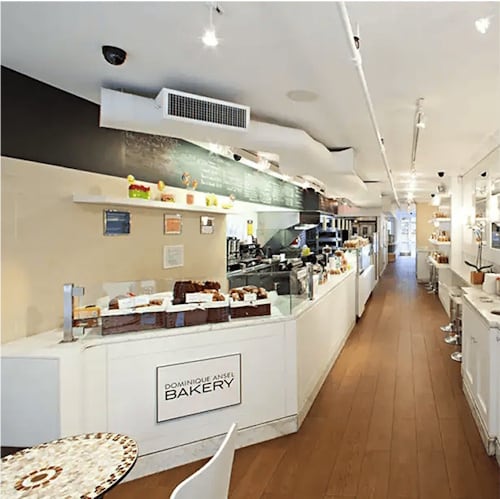
More importantly, consumers are invited to buy entry into a carefully curated aesthetic universe as much as pastries themselves.
That’s why contemporary bakeries increasingly resemble designer concept stores or fragrance boutiques rather than traditional food retail. Brushed-steel counters, curated lighting and visible lamination stations all communicate craftsmanship and exclusivity before consumers even reach the till.
Watching pastry chefs laminate dough, pipe fillings or glaze desserts in full view mirrors the logic fashion houses use with visible ateliers and hand-finishing. Consumers want evidence of labour, artistry and process as craftsmanship functions as part of perceived value.
Even packaging has evolved into status signalling. The branded pastry box has become part of the product itself, functioning less like transport and more like proof of cultural participation once photographed online.
At the same time, those bakers have mastered a particularly powerful luxury trick: exclusivity without true exclusion.
Unlike designer handbags or fine jewellery, premium bakery still feels accessible enough for broad participation. Consumers from vastly different income brackets can buy into the same bakery trends, queue for the same viral pastries and briefly experience the same aspirational world without catastrophic financial commitment.
That emotional accessibility gives sweet bakery enormous commercial power in an economy where many consumers feel increasingly locked out of traditional luxury culture.
Nostalgia sells emotional safety

The bakery boom is being fuelled by a deeper emotional shift as consumers increasingly crave familiarity in unstable times. That’s why nearly every major brand now comes loaded with nostalgic coding, whether it’s brownies, jam doughnuts, birthday-cake flavours, school-dinner puddings, vanilla sponge, custard slices or oversized cinnamon rolls dripping with icing.
These aren’t random flavour trends or simple throwbacks. They function like emotional shorthand, tapping directly into familiarity, comfort and reassurance at a time when consumers increasingly feel overstimulated, financially stretched and emotionally exhausted.
But consumers don’t want nostalgia served exactly as they remember it. They want it upgraded, aestheticised and socially elevated. Think school cakes topped with brown-butter frosting and Maldon salt; jam doughnuts filled with single-origin berry compote; banana bread flouncing café-core lifestyle branding. The emotional mechanics are the same, but the presentation must be completely re-engineered for modern consumers who want comfort wrapped in premium storytelling.
Hybrid bakery formats are exploding globally for the same reason. Croissant-doughnuts, cookie pies, cheesecake-filled buns and laminated dessert mashups all tap into a powerful emotional contradiction: consumers want products comforting enough to recognise, but visually dramatic enough to still feel exciting.
Rewriting indulgence for the wellness era

Consumers absolutely want indulgence but they’re rejecting pleasure that feels careless, outdated or nutritionally embarrassing.
Sweet bakery therefore needs to rewrite the emotional contract. Protein brownies, fibre-rich cookies, reduced-sugar cakes, sourdough sweet goods and ‘made with real fruit’ messaging are flooding the category as brands recognise consumers want pleasure wrapped in some form of plausible deniability.
Saxenhammer’s 2025 global bakery report notes growing demand for reduced-sugar, free-from and functional bakery products alongside continued appetite for premium indulgence. However, wellness and hedonism are increasingly merging into something emotionally smarter and commercially more powerful. Importantly, the industry has learned that consumers don’t want wellness messaging that destroys the fantasy. Nobody wants joyless products marketed like punishment. They expect bakery to deliver pleasure first, while functionality softens the guilt equation.
But perhaps the most important shift is what sweet bakery now represents culturally.
Consumers aren’t turning to pastries purely for hunger, indulgence or even nostalgia anymore. They’re increasingly using bakery as a form of emotional self-management in an overstimulated, financially anxious and algorithm-driven world.
Sweet bakery has become one of the few remaining luxuries that still feels emotionally accessible. And unlike many categories built around restraint, optimisation or self-denial, bakery still offers softness, pleasure, abundance and fantasy – qualities consumers increasingly crave as everyday life feels more expensive, more digital and more exhausting.
The category’s biggest strength may ultimately have very little to do with sugar, butter or laminated dough. It lies in the bake’s ability to make consumers feel briefly comforted, culturally relevant and emotionally rewarded all at once.
And that’s an extraordinarily powerful business model.


