


Key takeaways:
- Weird works when it builds on an existing consumer trend – not when it tries to invent one from scratch.
- Shock can drive trial, but without a clear role or repeat appeal, most left-field launches fade as quickly as they appear.
- The most successful ‘strange’ products hide their novelty behind familiarity, letting the benefit land without forcing consumers to confront it.
There’s a growing sense that parts of the food and drink industry are no longer innovating at the edges – they are deliberately jumping off them. Over the past 12 months, a wave of eccentric product launches has emerged, designed to provoke, confuse and, above all, be talked about.
Some of it is clearly theatre, and some more serious than it looks. But the mistake is assuming they’re all just stunts. Brands today are operating in a market defined by saturation, cautious spending and shrinking attention spans. In that environment, incremental innovation struggles to register. A new flavour extension or a marginal reformulation rarely earns a second glance. But a product that makes consumers pause – or recoil – has a far better chance of cutting through.
These are also not throwaway gimmicks dreamt up in isolation. Many of the most extreme launches are rooted in genuine macro trends – the protein boom, functional indulgence, experiential eating, nostalgia marketing – but pushed to their outer limits. The weirdness is often a byproduct of amplifying a real consumer signal to its logical extreme.
Protein, indulgence and the breaking point of ‘better-for-you’
Few categories have been stretched as aggressively as protein, and no product captures that tension better than Meaties, launched in the US in March. Marketed as a cereal made from real ground beef, the product replaces grains with dehydrated meat to deliver around 20g of protein per serving. It comes in flavours such as Maple Cinnamon and Chocolate Peanut Butter, deliberately borrowing from traditional cereal cues while subverting them entirely.
On first read, it sounds like someone has taken the protein trend too far. In reality, it’s probably closer to the end point than the outlier. People want more protein, they’re wary of carbs, and breakfast is under scrutiny.
The fact Meaties sold out early on tells you something important. Not that everyone wants beef for breakfast, but that enough people are willing to try it when it lines up with how they already think about food.
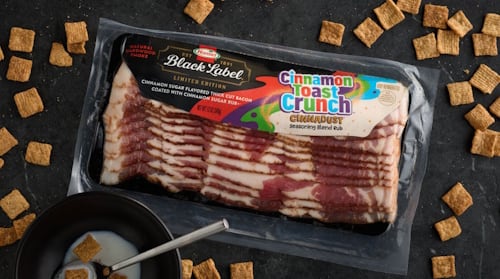
Put that next to bacon-flavoured Cinnamon Toast Crunch, a collaboration between General Mills and Hormel that appeared last year as a limited release, and you get a cleaner contrast. The product leaned into sweet-savoury crossover, using artificial smoky bacon flavour layered onto a familiar cereal base. It sold out rapidly online, driven by curiosity and collectability, but was clearly positioned as a limited-edition experience rather than a permanent fixture.
But while bacon cereal succeeded as theatre – a nostalgic brand playing with its own boundaries – Meaties is attempting something more disruptive, recoding cereal as a protein delivery system. Both generated attention, but only one is trying to redefine the category. Whether consumers will follow that redefinition beyond the initial novelty remains uncertain.
Disgust, nostalgia and the economics of shock

Rewind’s battery-flavoured corn crisps, launched in the Netherlands in July last year, sound like a dare more than a product. The idea is simple but oddly specific – recreate the metallic tang people remember from touching a battery to their tongue as a child. The brand leans into that shared memory, framing it as nostalgia rather than outright provocation, with ambitions to take the concept wider across Europe.
“It was definitely an unusual brief,” says Mattias Larsson, chef and flavourist, who led the development of the flavour. “We used a blend of citric acid and sodium bicarbonate to create the tongue-tingling effect and balanced it out with mineral salts which give the chips a metallic tang. The result is surprisingly tasty and it’s definitely a flavour that sparks curiosity.”
On paper, it feels like it should tip too far, but in practice, it holds. Not because consumers are craving that flavour, but because they recognise it immediately. The experience lands closer to an exaggerated sour crisp than anything genuinely unpleasant, which makes it surprising without being punishing.
That restraint is what makes it work. The concept pushes right up to the edge, but the execution stops short of going over it. Enough of the idea comes through to make it distinctive, but not so much that it becomes inedible.
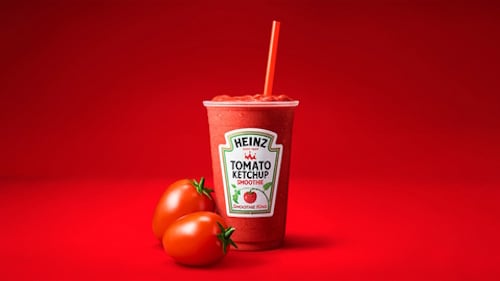
Heinz’s Tomato Ketchup Smoothie, which surfaced in the US last year in collaboration with Smoothie King, didn’t quite manage that same balance. By combining ketchup with fruit ingredients such as strawberries, apple juice and acai, it leaned into the technical argument that tomatoes are fruit.
“When we saw this cultural debate start gaining traction, we knew we had to weigh in with a resounding yes!” says Angie Madigan, VP of Elevation Marketing at Kraft Heinz. “The idea of a ketchup smoothie is provocative, and our top priority was landing a delicious tasting fruit smoothie with distinct yet well-balanced ketchup notes.”
However, consumer reaction was sharply divided, with some embracing the concept and others dismissing it outright as unpleasant. And positioned as a short-term, limited-edition activation rather than anything more permanent, it travelled well as an idea but didn’t have the same grounding as a product.
That’s the pattern you see again and again. If the weirdness is the only thing doing the work, it runs out of road quickly.
Where science meets sensory confusion

Some of the most unusual launches are attempts to reconcile indulgence with functionality, although the results can feel conceptually at odds.
Fish collagen chocolate sounds like one of those ideas built to provoke a reaction rather than solve anything meaningful. In this case, though, there’s a clearer rationale behind it. DolCas Biotech showcased its Morikol fish collagen tripeptide at SupplySide Global last year, using chocolate as a way to demonstrate how the ingredient could be folded into familiar formats. The thinking is straightforward: consumers are increasingly fatigued by pills and powders, but still interested in benefits linked to skin, ageing and joint health. Chocolate offers a route in without asking them to change their behaviour.
It’s already moving beyond concept. Morikol has appeared on the market through Cup of Joe, LLC’s Zend Wellness brand, which offers MetaGlow Collagen, a functional coffee featuring marine collagen. There’s also some clinical backing behind the positioning. Trials have linked a daily intake of 1g to improvements in skin elasticity and hydration, while a 2g dose has shown benefits for joint health. That gives the ingredient a degree of credibility that most novelty-led launches lack.
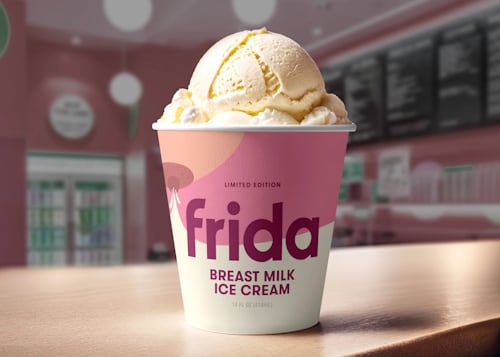
The breast milk ice cream launched last year by Frida in collaboration with OddFellows Ice Cream Co. to mark the release of its 2-in-1 manual breast pump, sits at the opposite end of the spectrum. Designed to mimic the flavour profile using ingredients such as colostrum, it leaned heavily on curiosity. People talked about it, shared it and, in some cases, tried it.
But that’s largely where it stayed. The product was only ever available for a short window, tied to a campaign moment rather than any long-term retail plan. There’s no obvious role for it beyond that initial reaction – and without one, even the most talked-about ideas tend to fade quickly.
Not everything is built to last

A lot of the more unusual launches from the past year make more sense when you stop thinking about longevity altogether. They’re not there to become staples. They’re there to create a moment, then get out of the way.
Campbell’s Chunky beer-infused soups, developed with Pabst Blue Ribbon, fall into this category. Combining beer with formats such as chilli and cheese-based soups, the range leaned heavily into indulgence and masculine-coded comfort food. It was less shocking than other examples but still designed to stand out in a traditionally conservative category.
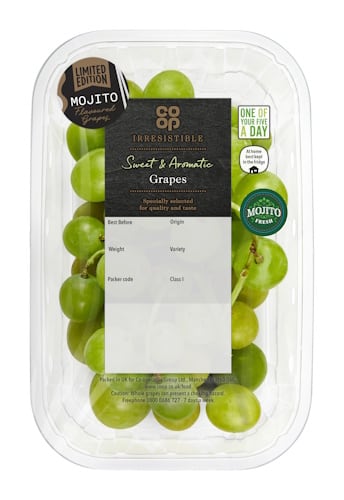
Similarly, cocktail-inspired snacks such as piña colada-flavoured popped corn, launched through a collaboration between Pop Works and Malibu, and mojito-flavoured grapes introduced by the Co-op in the UK, show how brands are borrowing cues from alcohol without including it. These products tap into social occasions and flavour familiarity while remaining accessible across demographics.
Magnum’s Hydro: Ice, launched in Ibiza last year ahead of its corporate separation from Unilever, pushed this further. A glow-in-the-dark, low-calorie ice lolly enriched with vitamins and magnesium, it targeted ‘healthy hedonists’ – consumers who want indulgence that aligns with wellness and nightlife culture. It was visually striking, nutritionally positioned and culturally timed, making it a textbook example of modern experiential NPD.
These products tend to succeed on their own terms because they’re not expected to last. They create moments, generate coverage and allow brands to experiment without long-term commitment. But they also reinforce a broader shift in how innovation is being measured. Success is increasingly defined by engagement rather than endurance.
That’s where the industry faces its most significant challenge. The past 12 months have shown that consumers will engage with almost anything once. They’ll try beef cereal, taste battery crisps and debate ketchup smoothies. The harder challenge is what they will buy again.
The most effective left-field launches are those that anchor their strangeness in a real consumer need, whether that’s protein density, functional benefits or new usage occasions. The weakest rely entirely on the shock itself. As more brands enter this space, that distinction will become more important.
The industry isn’t necessarily going too far, but it is operating closer to the edge than at any point in recent memory. Left-field NPD has become a tool not just for innovation, but for visibility. Used well, it can unlock new categories and reshape expectations. Used poorly, it risks reducing innovation to a series of increasingly desperate attempts to be noticed.
What the past year ultimately reveals isn’t that consumers have lost their sense of taste, but that they’ve expanded it – selectively. They’re willing to experiment, but only when the experiment offers something in return.


