


Key takeaways:
- Protein has shifted from performance enhancer to everyday expectation, with 86% of consumers actively increasing intake.
- GLP-1 adoption is accelerating demand for nutrient-dense, high-protein formats as appetite suppression reshapes portion and purchasing behaviour.
- The competitive edge is no longer adding more grams of protein, but integrating it seamlessly within reformulation, clean label and margin constraints.
86% of Americans say they’re actively trying to add more protein to their diets. That single figure from RepData research fielded on behalf of PepsiCo, explains why protein feels less like a trend and more like a requirement. When nearly nine in 10 consumers are deliberately increasing intake, protein stops being optional: it becomes expected.
At the Consumer Analyst Group of New York (CAGNY) Conference 2026, Kerry Group described protein as no longer a trend but a ‘design requirement’. In the US, foods carrying protein claims are growing at more than 7% CAGR, while products without protein positioning remain stuck in low single digits.
That gap tells its own story. Ten years ago, protein meant performance. It came in tubs, scoops and shaker bottles. It was coded gym – deliberate, functional, faintly joyless. If you added protein, you were doing something purposeful.
Now? It’s in the trolley without ceremony. Crisps. Pancakes. Ready-to-drink coffee. Bagels. Chicken snacks that are, frankly, already protein adding more protein. It’s no longer a fitness accessory – it’s folded into the everyday shop.
Somewhere along the way, protein stopped feeling specialist and started feeling normal. I should know: I have a Gen Z son who checks protein grams on packaging the way previous generations checked sugar or calories. For him, it’s not about bulking. It’s just how you eat.
Mainstream without compromise
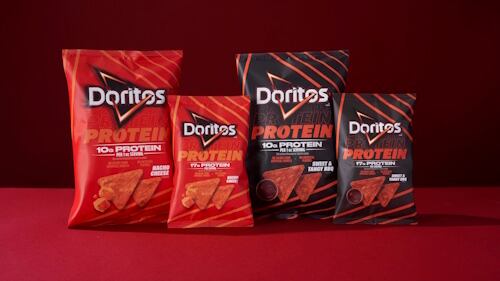
Take Doritos Protein. PepsiCo Foods US is launching Doritos Protein in Nacho Cheese and Sweet & Tangy BBQ, delivering 10g of protein per 1oz serving, with a 17g single-serve bag arriving later this year. The protein source is dairy-based casein. What’s striking isn’t the grams – it’s the positioning. There’s no pivot to bodybuilder aesthetics. It’s still about flavour and crunch.
“The launch of Doritos Protein marks our strategic expansion into the protein snack category,” said Hernán Tantardini, CMO, PepsiCo Foods US. “We’re elevating the bold flavour and signature snacking experience consumers expect by using novel flavour and seasoning methods. Now, each one-ounce serving delivers 10 grams of protein, and a single-serve bag with 17 grams of protein is coming later this year.”
He added: “70% of consumers want their salty snacks to have protein – and now we are making it more accessible and seamlessly integrated into everyday snacking occasions without compromising the distinctive Doritos experience.”
That phrase – seamlessly integrated – matters more than it first appears. When protein was niche, brands competed on headline numbers. Now the pressure is different. If protein is expected, it has to be invisible. It has to sit inside the product without disturbing the experience.
Jess Spaulding, VP of marketing at PepsiCo Foods US, put it bluntly. “Doritos is synonymous with bold flavor and iconic crunch – two attributes that our fans know and love. When we set out to create this product, we wanted to ensure we were delivering that unmistakable snacking experience, but in a new way with the added benefit of protein.”
The technical reality makes that ambition harder than it sounds.
“Protein is hard,” said Elizabeth Horvath, global VP of Marketing for Taste at Kerry, speaking at CAGNY 2026 in Orlando. “It stresses taste, texture, shelf life and processing, often forcing trade-offs that limit scale.”
Protein interferes with viscosity and mouthfeel. It can introduce off-notes. It changes water activity and structure. It complicates manufacturing. But here’s what’s changed: manufacturers haven’t backed away from that complexity. They’ve invested around it. Masking systems are better. Texture solutions are more sophisticated. Processing adjustments are now routine.
The industry didn’t just decide protein mattered. It built the capability to make it workable.
Retailers are moving, too. Private label lines increasingly include protein-forward SKUs across categories. What used to be a brand advantage is becoming shelf architecture.
GLP-1 reshapes the stakes

If protein’s early growth was driven by fitness culture, the next phase looks very different. According to the GlobalData Pharmaceutical Intelligence Center, the GLP-1 pill market is forecast to rise from $3.2bn in 2025 to $34.3bn by 2031 – a CAGR of 48.4%. Oral formats are expected to broaden uptake considerably.
Shraddha Shelke, consumer analyst at GlobalData, says the knock-on effects could be significant. “Appetite suppression may lead to smaller basket sizes, fewer impulse purchases, increased demand for high-protein, high fibre, and nutrient-dense, portion-controlled options, and greater scrutiny of ingredient formulations in food and drinks.”
GLP-1 medications reduce appetite and slow gastric emptying. When people eat less overall, what they do eat carries more weight. Nutrient density starts to matter in a different way.
Protein supports satiety. It helps preserve muscle mass during weight loss. In that context, it shifts from aspirational to practical.
Fonterra reports US retail growth of 6.8% in protein bars, 7.2% in sports powders and 7.4% in ready-to-drink protein beverages. Globally, the protein powder market is projected to grow from $28.8bn in 2025 to $59.9bn by 2035.
But the real story isn’t confined to supplements. Protein is spreading into everyday categories because fullness and function now sit alongside indulgence in the value equation. Baseline doesn’t mean boring. It means everywhere.
Protein under pressure

There’s another layer to this shift. At CAGNY 2026, Kerry noted that more than 60% of food and beverage activity now involves reformulation. Sugar reduction, sodium cuts and artificial ingredient removal are happening in parallel. Protein doesn’t exist outside those pressures. It has to fit within them. It must comply with HFSS frameworks in markets such as the UK. It must align with clean-label expectations. It must navigate ingredient volatility and cost constraints.
In one example shared at CAGNY, Kerry supported a global bakery in cutting sodium and sugar by more than 50%, removing artificial ingredients and replacing egg to mitigate supply-chain risk – all without losing consumer preference.
That’s the tightrope. Adding protein on its own isn’t difficult. Adding it while reducing sugar, maintaining texture and protecting margin is another matter entirely. So what changes? When protein becomes standard, the competitive game shifts.
Products without credible protein positioning risk feeling nutritionally thin, particularly in breakfast and snack occasions linked to satiety. Execution becomes more important than exaggeration. It’s less about how loudly protein is promoted and more about how smoothly it’s delivered. And protein strategy can’t sit in isolation. It has to connect with reformulation plans, portion design and operational capability.
Protein isn’t the disruptor anymore. It’s the baseline. GLP-1 is simply accelerating what was already underway.


