


Key takeaways:
- Chocolate remains the emotional anchor of Valentine’s Day, but brands are winning by pairing familiarity with playful formats, seasonal shapes and limited time drops.
- Valentine’s is no longer just for couples – Galentine’s, classrooms and self-treating are driving shareable packs, inclusive ingredients and flexible dining offers.
- From cheese bouquets to AI-resistant romance campaigns, the most successful launches feel personal, experiential and easy to give without overthinking.
Valentine’s Day rarely surprises the industry, but it keeps performing. The National Confectioners Association’s (NCA) Treats & Trends snapshot shows 84% of Americans still mark the holiday with chocolate or candy, a reminder that despite inflation, reformulation pressure and shifting diets, Valentine’s remains stubbornly indulgent.
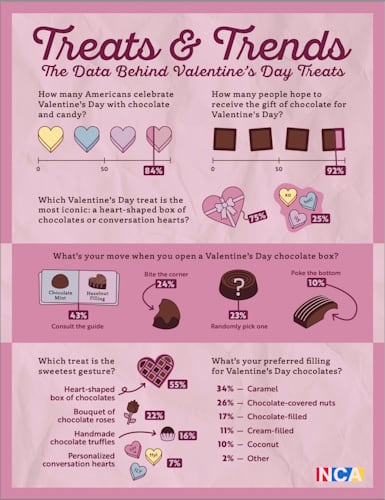
Chocolate’s grip is especially firm. An overwhelming 92% of consumers say they hope to receive chocolate on Valentine’s Day, which helps explain why brands are still willing to absorb seasonal complexity even as cocoa prices stay high. What’s changed is how carefully shoppers choose. Fewer people are buying blindly and more are looking for something that justifies the spend – through novelty, shareability or emotional intent.
That shift shows up in how consumers actually open a box of chocolates. While 43% still prefer classic assortments, nearly a quarter admit to picking pieces at random and another 24% go straight for their favorite flavor. In practice, that leaves brands walking a tightrope: stay familiar enough to reassure but interesting enough to hold attention once the lid comes off.
This year’s NPD reflects that tension. Heart-shaped boxes remain the strongest visual cue for Valentine’s gifting, while caramel, nut-filled and chocolate-filled centers continue to dominate. Around those anchors, brands are experimenting with portioning, pricing and messaging that stretch Valentine’s beyond couples into offices, classrooms, friendship groups and self-purchase moments.
French romance, modern case appeal

Across the UK, PAUL is once again leaning on Valentine’s as a reason to trade shoppers up. Its limited edition pâtisserie range runs from February 9-15 in London, Oxford and Reading, with pre-orders opening earlier to capture planned gifting as well as impulse footfall.
The Chocolate & Cherry Éclair sets the tone, pairing cherry compote with chocolate crème pâtissière and a gold-dusted finish that reads as celebratory without drifting too far from familiar territory. Two heart-shaped individual cakes – a Fraisier finished with blush-pink marzipan and a Craquant topped with raspberry crunch – are priced to encourage double buying rather than single indulgence.
Larger formats do the heavier lifting for group occasions. A Pink Fraisier Cake serving six to eight and a 12-piece macaron box extend the offer into sharing moments, letting PAUL build basket value without introducing new recipes or operational strain.
Cookie drops with cultural pull

In the US, Crumbl is sticking to what it knows. Valentine’s doesn’t arrive as a dramatic pivot, but as another chapter in the brand’s rotating drop model, running alongside Game Day Party Boxes.
The Valentine’s menu includes both full-size cookies and minis, which keeps the door open for gifting, sampling and group sharing. Flavors like Dubai Chocolate Strawberry Brownie and Salted Caramel Cheesecake Cookie lean indulgent but familiar, designed to spark conversation rather than polarize.
Crumbl’s restraint is telling. By resisting permanent seasonal SKUs, the brand keeps novelty high while limiting risk – a model that continues to resonate with younger consumers and landlords alike.
Inclusive treats with scale
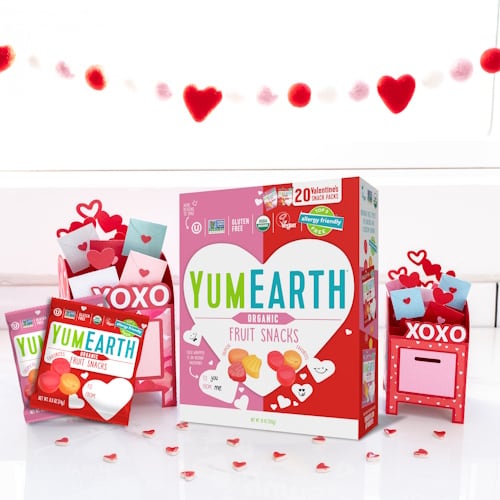
YumEarth returns with a Valentine’s lineup available across the US, spanning gummies, sour candies, lollipops, chocolate treats and variety packs. The strategy isn’t about reinvention – it’s about reach.
The new Valentine’s Organic Fruit Snack Box is the clearest signal of that intent. Featuring strawberry, cherry, peach, raspberry, mango and pineapple flavors, the larger-format box is made with organic ingredients and free from the top nine allergens. It’s positioned squarely at classrooms and offices, where ingredient restrictions often dictate purchasing decisions during seasonal exchanges.
For YumEarth, Valentine’s remains a moment to reinforce brand values rather than push boundaries – a steady play in an otherwise noisy window.
Dessert without the drama
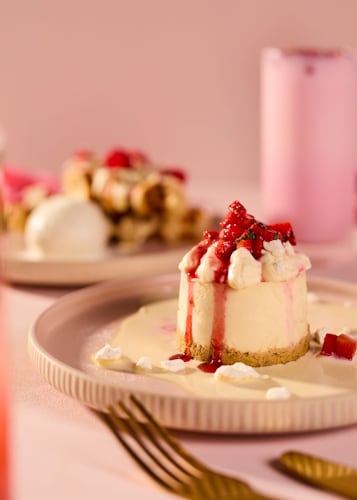
Across the UK, Heavenly Desserts is keeping Valentine’s deliberately low-key. Its two-diners-for-£22 offer runs nationwide from February 9-15, with each guest choosing a drink and either a dessert or brunch main.
The appeal is simplicity. There’s no fixed menu, no premium surcharge and no pressure to treat Valentine’s as a formal dining event. That flexibility also allows stores to absorb Valentine’s traffic without disrupting core operations, while broad menu choice helps protect margins during a high-volume trading week.
For operators, the promotion shows how Valentine’s can be monetized through repeat visits and accessible pricing, rather than relying on one-night-only theatrics.
Lunchbox Valentine’s, reformulated
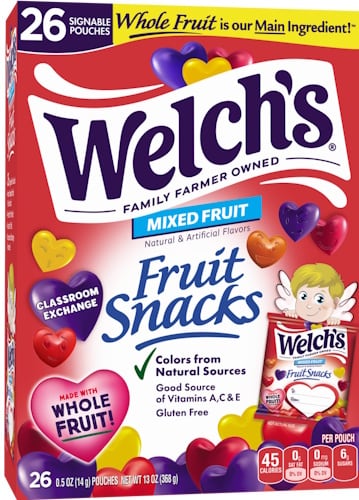
Welch’s Fruit Snacks is bringing Valentine’s cues into everyday snacking across the US, leaning on familiar formats rather than novelty for novelty’s sake. The seasonal range features emoji-shaped fruit snacks in themed pouches with To-and-From panels, making them immediately usable for classroom exchanges and low-effort gifting without requiring additional packaging or prep.
From a formulation standpoint, the products emphasize whole fruit as the main ingredient, colors from natural sources and no artificial dyes, aligning with the growing scrutiny facing kids’ snacks from both parents and regulators. That positioning allows the Valentine’s packs to sit comfortably alongside core SKUs rather than being treated as a once-a-year indulgence.
The range is also built for merchandising flexibility. Multiple pack formats allow retailers to place the product in seasonal Valentine’s displays, lunchbox aisles or value-driven multipack sections, supporting incremental sales without displacing everyday items.
Saying it with Silk
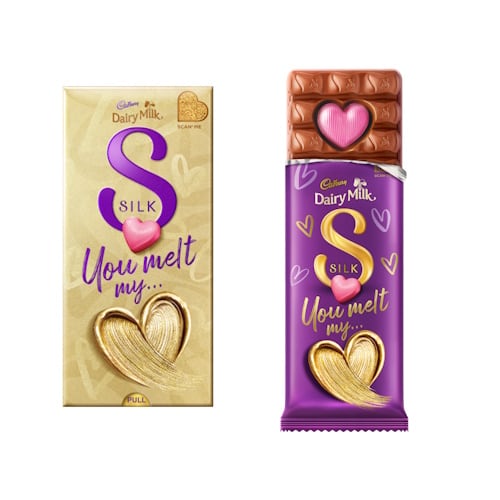
Mondelez India is returning Cadbury Dairy Milk Silk’s ‘Say It With Silk’ platform with a sharper cultural edge. The 2026 campaign leans into the limits of AI-generated communication, contrasting digital convenience with genuine emotional effort.
Nitin Saini, VP of Marketing at Mondelez India, said: “Say It With Silk has always helped people express their feelings in meaningful ways. As technology increasingly shapes how we communicate, this year’s film reflects what makes love truly human – emotion, intent and effort.”
Refreshed Valentine’s packs and a broad activation across content, influencers, music and retail support the campaign nationwide, reinforcing Silk’s role as a gifting-led brand in a fast-evolving market.
A Valentine opening with impact
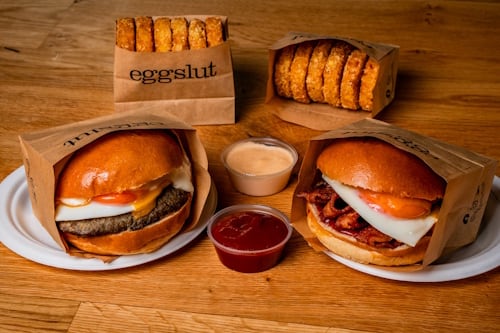
Eggslut is using Valentine’s Day itself as a launchpad, opening its first Manchester location in the UK on February 14. The opening’s backed by experiential incentives, including free sandwiches for the first 100 customers through the doors.
A Manchester-only bundle running through the end of February is designed to encourage group visits, while the brand’s growing catering offer points to ambitions that extend well beyond individual store launches.
Tying the opening to Valentine’s gives Eggslut instant cultural relevance and built-in footfall on day one, reducing the risk that typically comes with a new-market debut. It also positions the brand as an all-day, shareable occasion rather than a one-off breakfast stop, broadening its appeal in a highly competitive urban market.
Personalization as strategy
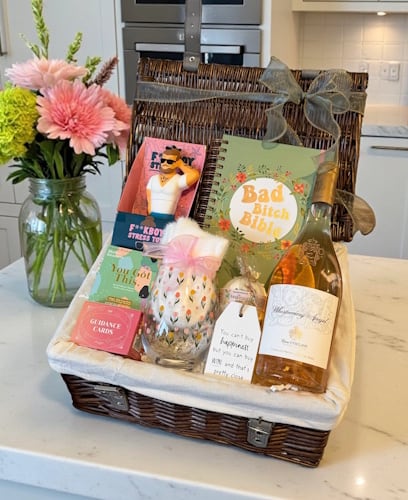
UK gifting business Top Hampers is approaching Valentine’s from a different angle. Its tailored hampers, available nationwide, let customers customize gifts based on recipient preferences rather than preset themes.
The model taps into rising fatigue with default Valentine’s gestures, offering a way to signal effort without overwhelming the shopper.
From an operational perspective, the approach allows Top Hampers to scale personalization without fully bespoke fulfillment, protecting margins while increasing perceived value. For consumers, it reduces decision fatigue at a time when gifting expectations are high but patience often isn’t.
Pink velvet everywhere
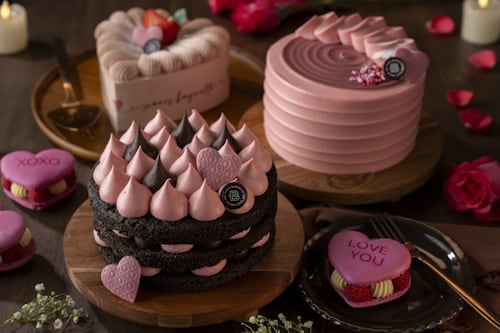
Paris Baguette North America is stretching Valentine’s into a multi-week sales window with its Pink Velvet menu, available from late January through mid-February. Rather than centering the holiday on a single day, the brand is using color, format and limited-time cues to sustain traffic across multiple visit occasions.
The range spans cakes, pastries, macarons and beverages, unified by pink velvet soft cream and ruby chocolate finishes that translate easily across display cases and drink menus. That consistency allows stores to refresh the seasonal look and feel without overhauling production processes or adding complex SKUs.
“These handcrafted creations are designed to help guests create meaningful moments,” says chief marketing officer Cathy Chavenet, pointing to the menu’s role in driving repeat visits rather than one-off splurges.
Cheese as a love language
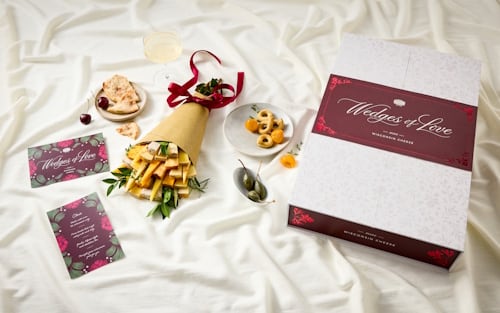
In the US, Wisconsin Cheese is deliberately breaking with Valentine’s convention. Wedges of Love, a $100 limited-edition cheese bouquet available nationwide via direct-to-consumer shipping, replaces roses with nine artisan cheeses, pairing guidance and keepsake packaging designed to mimic a traditional floral arrangement.
The concept leans on research showing growing fatigue with predictable Valentine’s gifts, while tapping into the continued premiumization of cheese as both an indulgence and a shared experience. By positioning cheese as the centerpiece rather than an add-on, the launch reframes Valentine’s gifting around at-home occasions rather than dining out.
“Designed to rival the drama of flowers and the indulgence of fine chocolate,” says Suzanne Fanning, chief marketing officer for Wisconsin Cheese, positioning the product as experiential gifting rather than novelty.
Retro flavors, modern logic
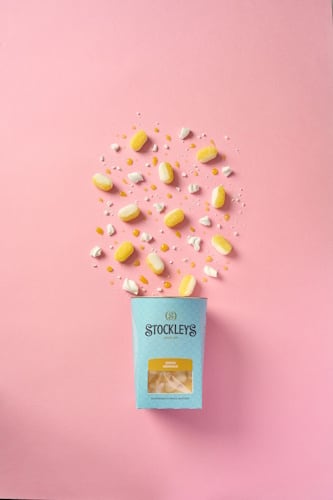
British confectionery brand Stockley’s is rolling out its Lemon Meringue sweet carton across the UK in 2026, translating a familiar dessert flavor into a shelf-stable sharing format. The launch builds on the success of Stockley’s earlier dessert-inspired cartons, which have helped the brand stay visible as chocolate prices continue to pressure traditional confectionery ranges.
The Lemon Meringue format combines a lemon and vanilla shell with a tangy citrus center, deliberately leaning into contrast rather than overt sweetness. That balance allows the product to appeal both as a nostalgic treat and as something that feels sharper and more contemporary on palate.
Andy Valentine, head of marketing at Stockley’s, says early research shows the flavor lands across age groups, offering enough citrus bite to feel current while still tapping nostalgia. He adds that dessert flavors give shoppers permission to trade into non-chocolate options without feeling like they’re compromising on indulgence.
A Valentine flavor winner
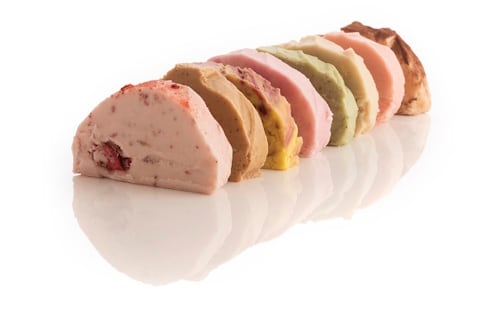
Employee-owned Fudge Kitchen has crowned Strawberry Rose as the winner of its 2026 New Year, New Flavor competition, with the fudge launching across the UK from February 1. The annual competition invites teams from the brand’s six high-street shops to develop limited edition flavors, with the winner selected for national rollout.
Strawberry Rose stood out for its restraint as much as its romance, pairing fresh strawberry with fragrant rose rather than relying on visual novelty alone. That made it a natural fit for Valentine’s, where gifting expectations are high but overly theatrical flavors can divide shoppers.
“Strawberry Rose feels elegant and balanced,” says MD Richard Parson, citing texture and flavor harmony as decisive factors. The flavor will be available both in stores and online, giving Fudge Kitchen a Valentine’s SKU that works equally well for gifting, sharing and self-purchase.
Heart-shaped breakfast returns
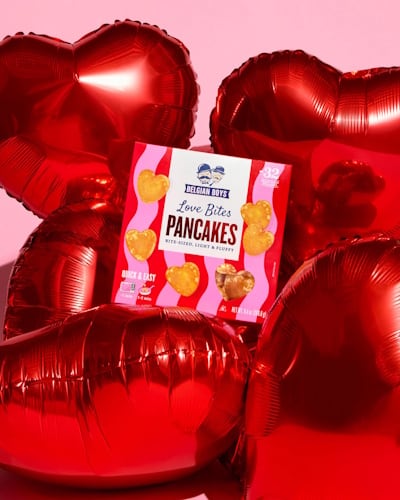
Belgian Boys is bringing back its heart-shaped Love Bites mini pancakes following a sell-out debut last year, this time with expanded distribution across the US. The relaunch marks a step change for the SKU, moving it from a novelty seasonal hit to a broader trial driver within the brand’s refrigerated breakfast portfolio.
Love Bites are designed to fit into everyday routines rather than special-occasion cooking. Ready in one minute and made without artificial flavors or preservatives, the pancakes target busy households looking for an easy way to acknowledge Valentine’s without adding prep time.
By scaling distribution and keeping the format simple, Belgian Boys is betting that seasonal storytelling can drive repeat purchase rather than one-off curiosity. The relaunch also supports the brand’s wider push into limited-time offerings as a way to test velocity and build brand affection.
Pink cookies with purpose
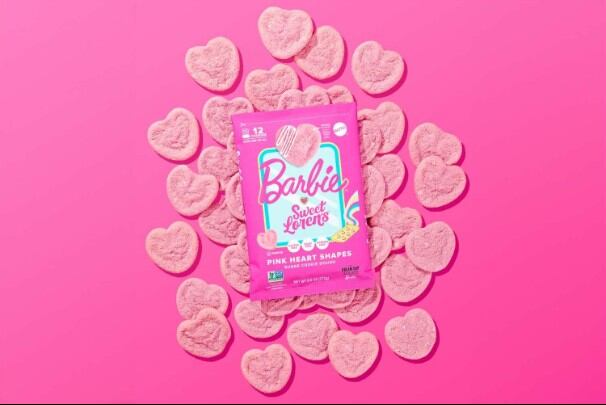
Finally, Sweet Loren’s is returning its heart-shaped sugar cookie dough for a limited Valentine’s run across the US, bringing back a seasonal SKU that’s proven its appeal with both families and younger shoppers. The cookies are naturally colored with real beets and free from the top nine allergens, including gluten and dairy, keeping the brand’s clean label credentials front and center.
The product’s positioning allows it to function as both a baking activity and a finished treat, making it suitable for classroom events, at-home celebrations and gifting. That flexibility has helped Sweet Loren’s carve out space in a crowded Valentine’s freezer and refrigerated dough set.
The Valentine’s run is again linked to the Barbie Dream Gap Project, reinforcing Sweet Loren’s broader focus on purpose-led marketing while giving the seasonal SKU an added layer of meaning beyond novelty.


