


Key takeaways:
- By reformulating a burger bun rather than launching a new product, McDonald’s India showed how fiber can be built into everyday bakery at scale without relying on claims or consumer education.
- Millets offer a practical way to lift fiber and nutrient quality using familiar, climate-resilient grains that work with existing eating habits rather than asking consumers to change them.
- As nutrition messaging matures in the GLP-1 era, fiber is gaining relevance not as a headline nutrient but as quiet infrastructure that improves how food performs over time.
In December, McDonald’s India began offering a multi-millet burger bun made with bajra, ragi, jowar, proso and kodo. On the surface, it looked like another customization option. There was no splashy product launch, no limited-time framing, no dramatic repositioning of the menu.
The move didn’t stay confined to foodservice. It was quickly picked up by Union Minister Jitendra Singh, who praised the reformulation publicly as part of India’s broader push to bring traditional grains back into everyday diets. In a post on X, Singh described the bun as “a global taste powered by desi nutrition,” highlighting the use of indigenous technology and Indian millets in a mainstream fast-food format.
Millets themselves aren’t new in India. What was new was where they’d turned up.
Burger buns are usually invisible. They exist to hold everything else together. They’re engineered for consistency, which is why changing them is more consequential than it looks. If you want to influence diets at scale, you don’t start with foods people need to learn how to eat. You start with foods they already do.
For years, the food industry has poured energy into protein and for good reason. Protein still matters, particularly as weight management, muscle health and GLP-1-driven eating patterns reshape how consumers think about fullness and nutrition. But that focus has had a side effect. Other foundational nutrients slipped out of view: fiber being one of them. Even as reformulation accelerated, intake levels haven’t improved and the gap between recommendations and reality has quietly widened.
Why this bun is different

The millet bun isn’t a cosmetic change. It isn’t a scattering of seeds or a partial flour swap designed to unlock a claim. The structure of the bun itself has been reworked using processing technology developed by the Central Food Technological Research Institute.
From an operational point of view, that matters. It means the bun can be produced at volume, handled like any other and rolled out without explanation. No staff scripts. No consumer education. It simply becomes the bun.
Fast-food systems tend to treat bakery cautiously for practical reasons tied to risk and scale. The bun is one of the most standardized elements in any quick-service operation. It has to behave the same way thousands of times a day, across climates, kitchens and skill levels. Changes to bakery affect toasting, holding time, moisture migration, sandwich assembly and shelf life all at once. A small shift in flour blend can ripple through the entire system.
Bakery is also eaten by everyone, every day. Unlike sauces or toppings, the bun isn’t optional in most formats. That makes it a high-stakes place to experiment. If a sauce doesn’t land, it can be removed. If the bun doesn’t perform, it affects the whole menu immediately.
Consumer tolerance for change in bakery is lower than brands often admit. Texture is noticed quickly and when something feels off in a sandwich, the bun is often where suspicion lands because it’s the constant across bites. That sensitivity has historically pushed chains toward conservative reformulation, favoring incremental options over defaults.
That’s why, in most markets, fiber tends to show up as a choice rather than a baseline – whole-grain buns, multigrain rolls or seeded options offered alongside the standard version. It allows brands to signal progress without forcing a system-wide shift that could disrupt operations or alienate customers.
Seen in that light, what McDonald’s India did is unusual not because it used millets, but because it was willing to re-engineer the default bakery component in a system built on consistency. India is the first McDonald’s market where fiber has been pushed into the foundation of the product.
Government backing for millets, including strong support from Prime Minister Narendra Modi, helped create the conditions for that move. But policy alignment only gets you so far. If the product doesn’t eat well, it doesn’t last. This one has.
Why millets work here
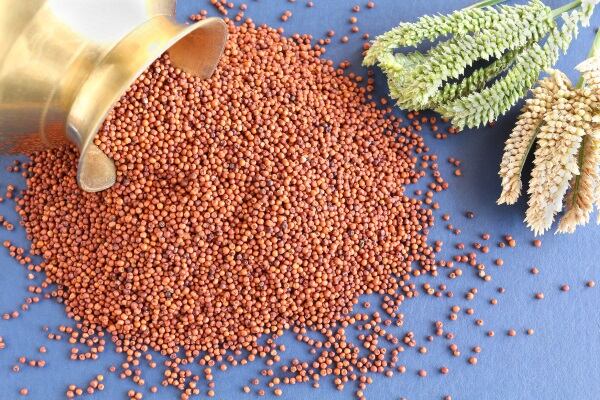
Millets tend to be discussed as a group, even though they vary nutritionally. What they share is higher fiber content than refined wheat flour, along with minerals such as iron, magnesium and calcium. Many also digest more slowly, producing a gentler blood sugar response.
Those qualities matter in India’s current dietary context. Urban diets have shifted rapidly over the past two decades. Refined grains, packaged foods and eating outside the home have become routine. Wheat-based buns and breads are everyday foods now, while coarse grains have steadily slipped out of regular use.
Fiber intake data in India isn’t as comprehensive as it should be, but available surveys and academic research point in the same direction: average intake, particularly in cities, falls well short of recommended levels. Calories are easy to come by. Fiber isn’t.
India is also grappling with rising rates of diet-related non-communicable disease. Type 2 diabetes and cardiovascular disease are no longer niche concerns. Fiber plays a central role in managing both, yet it rarely sits at the center of product reformulation strategies.
Millets change that equation without asking consumers to do anything differently. They don’t behave like functional ingredients. They don’t need isolating or fortifying. They simply replace part of what was already there.
What are bajra, ragi, jowar, proso and kodo?
All five are millets – hardy, small-seeded grains that have been grown and eaten across India, Asia and parts of Africa for centuries. Each brings slightly different nutritional and functional qualities, which is why they’re often blended in modern bakery applications.
Bajra (pearl millet): One of India’s most widely grown millets, particularly in arid regions. Bajra is high in dietary fiber, iron and magnesium, with a robust, slightly nutty flavor. It’s traditionally used in flatbreads and performs well in hot, dry climates.
Ragi (finger millet): Notable for its high calcium content, which is unusual among grains. Ragi is also rich in fiber and digests more slowly than refined wheat, supporting steadier blood sugar response. It has a darker color and denser texture.
Jowar (sorghum): Naturally gluten-free, high in fiber and mild in flavor, making it easier to incorporate into bakery products without dramatically changing taste. Sorghum is widely consumed in India and used globally in cereals and other food applications.
Proso (proso millet): Lighter in color and flavor than many millets, with a relatively quick cooking time. Proso provides fiber and plant protein and is often used in blended flours where neutrality and texture control matter.
Kodo (kodo millet): Particularly high in insoluble fiber and resistant starch, supporting digestive health. Kodo has a lower glycemic response than refined grains and is traditionally eaten in parts of central and southern India.
No single millet behaves like wheat in baking. Blending allows manufacturers to balance fiber content, texture, color, flavor and dough handling, making products like burger buns workable at scale while still delivering nutritional benefits.
The fiber gap isn’t just India’s problem

In the US, dietary guidance suggests around 25g of fiber a day for women and 38g for men, or roughly 14g per 1,000 calories. Actual intake sits closer to 15g-16g. Europe tells a similar story, with recommendations in the 25g-35g range and consumption lagging well behind.
Those numbers haven’t shifted much in years. What has shifted is tone. Consumers are tiring of being told to optimize single nutrients. Protein fatigue is real, as is skepticism toward extreme claims.
Fiber benefits from that moment. It’s familiar. It’s functional. It doesn’t need hype. Food that keeps people fuller, steadier and less spiky fits where the mood is heading, even if consumers don’t describe it in nutritional terms.
Millets fit neatly into that shift. They raise fiber using recognizable ingredients. They support sustainability goals in a way that feels practical rather than aspirational. And because they show up in foods people already eat, they don’t require a new eating occasion to justify themselves.
McDonald’s India didn’t set out to tell a millet story. It didn’t try to lead a nutrition conversation. It changed a bun. And that, quietly, is what makes it worth paying attention to.


