


Key takeaways:
- Regulatory pressure didn’t just intensify in 2025 – it reshaped how bakery and snack brands approach ingredients, labeling and risk.
- Consumer behavior shifted faster than strategy cycles, driven by health debates, GLP-1 disruption and an emotional turn in snacking.
- From billion-dollar mergers to zero-gravity chips, the industry proved it can absorb chaos and still find ways to surprise itself.
2025 didn’t stroll in. It barged through the doors of the bakery and snacks sectors like someone late to a meeting they forgot they were presenting at. By January 3, the industry was already absorbing a corporate shock sharp enough to rattle investor decks and unsettle the usual January quiet. And it kept coming. Each month felt like someone had thrown another dart at a board marked ‘regulatory panic’, ‘supply chain mess’, ‘lawsuit nobody predicted’ or ‘consumers doing something baffling again’.
The aisle also turned into a cultural sparring ground. Artificial dyes became headline material overnight. UPFs were suddenly blamed for everything short of the weather. GLP-1 drugs quietly rewired shopper instincts in a way economists will still be arguing about next year. And then a 5,000-year-old loaf of bread, as if to remind everyone that chaos has a sense of humor, ended up outperforming several billion-dollar business stories.
For all the turbulence, bakery and snacks didn’t fold. If anything, the sectors proved how fast they can pivot when the ground shifts. Plans were torn up, rewritten, tested, scrapped and revived again. And through it all, the year delivered some of the sharpest, strangest and most revealing storylines the industry has seen in a long time.
Here are the 12 that defined this unreasonably eventful year.
Corporate cliffhanger of the year
The Mars-Kellanova ‘will-they-won’t-they’ $36bn potential meltdown

The Mars-Kellanova saga began in late 2024 with the confidence of a handshake that only needed formalities. By early 2025, it looked more like a plotline from a political thriller. The US approved the deal early, waving it through with talk of competitiveness. Europe, however, took one look and reached for the brakes.
On June 23, the European Commission opened its investigation and that’s when the mood changed. Retailers whispered about leverage. Analysts split into camps over whether Pringles was actually the sticking point or simply the most convenient symbol of a broader discomfort with consolidation. Through July and August, the whole thing began to wobble.
Then October rolled in with Kellanova’s unexpectedly muscular Q4, which changed the tone almost overnight. And finally, on December 9, Brussels gave the deal the green light.
A merger that should’ve been routine became the industry’s longest-running cliffhanger. Sometimes the boardroom is better drama than anything on Netflix.
Legal drama of the year
Lindt’s lead lawsuit
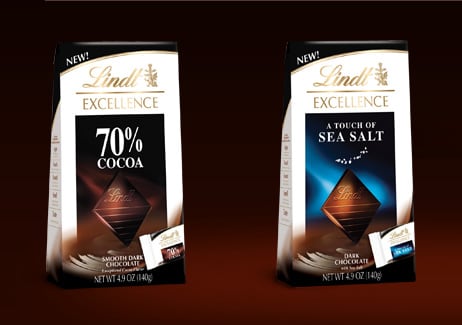
Nobody expects to read the words ‘lead’ and ‘cookies’ in the same sentence, which is exactly why the lawsuit involving Lindt’s chocolate line caused such an immediate jolt. The claims remain allegations, but that didn’t stop the industry from going into full introspection mode.
Manufacturers revisited testing protocols they thought were watertight. Retailers sharpened their questions. Food-safety experts reminded everyone – a little too eagerly – that supply chains don’t police themselves.
Whether the lawsuit lands or gets left on the bench, the damage was done the moment consumers hesitated. In a category built on everyday trust, even a flicker of doubt can travel fast.
Biggest controversy of the year
The red dye reckoning

Artificial colors had been drifting toward trouble for years, but 2025 was the year the ground finally gave way. Red Dye No. 3 was pushed out of the US food system. RFK Jr’s MAHA Commission turned synthetic colors into a two-year public spectacle. Texas took a swing at Mars, while Kellogg’s found its own color palette dragged into the political spotlight. And retailers, never ones to wait for regulators, started asking brands for reformulation timelines long before the ink dried on anything official.
R&D teams sprinted. Natural-color suppliers found themselves suddenly, almost absurdly, oversubscribed. Shoppers began wondering whether their favorite neon-bright snacks were about to fade into a suspiciously beige future. And plenty of brands didn’t bother waiting for deadlines – they moved early because the optics were shifting faster than the rulebook.
This wasn’t just another compliance chapter. It felt like the market correcting itself in real time.
Ingredient crisis of the year
Cocoa chaos

Cocoa has thrown curveballs before, but the 2025 version came in fast and didn’t stop rising. Weather shocks, aging trees, disease pressure, logistics failures – pick a culprit, they all played a part. Prices didn’t just climb; they spiked. Availability didn’t tighten; it collapsed. Overnight, the most universal flavor in snacking became a liability.
But cocoa wasn’t the first ingredient to cause trouble. Eggs beat it to the punch, swinging into crisis mode early in the year and forcing bakers to rework formulas long before cocoa delivered its own body blow. By midsummer, manufacturers were juggling shortages on multiple fronts. Chocolate levels were trimmed quietly. Packaging claims shifted. Some brands absorbed the chaos; others passed it along and hoped shoppers wouldn’t notice.
Alternatives rushed into the vacuum. Carob reemerged. Roasted and fermented grain bases got a second life. Fiber-linked flavor carriers had their closest look in years. And in a very 2025 twist, AI-assisted flavor modeling offered something almost unthinkable a decade ago: cocoa-light or cocoa-free profiles that still felt indulgent.
This wasn’t a ripple. It was a structural alarm bell.
Public enemy of the year
Ultra-processed foods (UPFs)

UPFs didn’t sidle into the 2025 conversation – they kicked the door in. The term started life as a quiet academic classification but has snowballed into a full-blown public-health flashpoint. The criticism wasn’t new; study after study has raised concerns. But the temperature kicked up a notch in November, when The Lancet published a blistering critique linking UPFs to long-term health impacts and reigniting a debate that’s been simmering for more than a decade.
Then came the real shockwave: a month later, San Francisco filed a sweeping suit against some of the world’s biggest CPGs – Nestlé, General Mills, Kellogg’s, Mondelēz among them – accusing them of misleading consumers about UPF-heavy foods and hinting that certain marketing tactics could even ‘manipulate’ perception. The filing is engineered for maximum impact and it’s landed exactly as intended.
None of this came out of nowhere. Throughout the year, regulators had already been circling long-standing concerns around baby food. Advocacy groups were agitating for tougher labeling. Public-health researchers were sounding alarms with increasing urgency. Social media, predictably, flattened all nuance by turning ‘ultra-processed’ into an all-purpose insult and dragging anything with more than three ingredients before a court with no appeal process.
Several other UPF-related lawsuits emerged in 2025 – some targeting specific health claims, others challenging marketing language – but most fizzled before gaining traction. A few lingered just long enough to make manufacturers uneasy, even if they ultimately dissolved.
Scientists keep pushing for nuance. Campaigners keep demanding cleaner labels. And consumers, gloriously inconsistent as ever, keep buying whatever tastes good.
If any category wore the villain cape in 2025, UPFs didn’t just wear it – they leaned into the role.
Disruptor of the year
The GLP-1 shockwave

While UPFs grabbed the torches and pitchforks, GLP-1 drugs quietly rewired the part that actually matters: shopper behavior. The anticipated snackpocalypse never arrived, but the ground absolutely shifted. Portions shrank. Protein soared. Indulgence softened around the edges. And a new vocabulary crept into the category almost overnight – ‘intentional snacking’ and the equally telling ‘protein-first habits’.
Manufacturers are being forced to rethink innovation on the fly. Retailers are updating planograms faster than anyone expected. Analysts argue – loudly – about which changes will outlast the hype and which are just the early tremors of a bigger, slower shift. GLP-1s haven’t destroyed the snack aisle. But they’ve quietly rewired its circuitry in ways the sector is still trying to map.
Cultural turn of the year
Snacking becomes therapy

Even as GLP-1 drugs reshaped portions, emotional snacking quietly stole the spotlight. Mondelēz’s State of Snacking research spelled it out: hunger isn’t the main motivation anymore. Comfort is. So is nostalgia, escape, familiarity – the things analytics can’t quantify as neatly as calories.
Old-school flavors resurfaced. Textural blends gained ground. Sound-linked flavor cues – something we’d have laughed at a decade ago – crept into R&D labs. Then TikTok’s ‘bed-rotting’ trend pulled snacks into a different cultural orbit altogether.
In 2025, the boundary between comfort ritual and consumption got very blurry.
Curiosity of the year
The 5,000-year-old bread that broke the internet

In a year overflowing with billion-dollar M&A swirl and regulatory fireworks, who could’ve predicted that a prehistoric loaf would steal everyone’s attention? When archaeologists reconstructed a 5,000-year-old Turkish bread, the internet reacted like it had discovered a new celebrity.
It was simple, strange and irresistible – a reminder that sometimes carbs beat capitalism in the attention economy.
Marketing mischief of the year
Hostess goes full stoner mode

Some brands flirt with irreverence. Hostess dated it publicly. Its 4/20 activation skipped subtlety and went straight for cannabis-adjacent humor – the Munchie Mobile, festival crowds, late-night winks that didn’t pretend otherwise.
It worked because it didn’t apologize. Hostess knew exactly who it was talking to and they talked back.
The most bizarre NPD of the year
Self-heating burritos; lemonade potato chips; beef & chocolate bar; zero gravity chips; and strawberry & creme sandwich

2025 didn’t dabble in strange innovation. It ran toward it. Self-heating burritos promised hot food without a plug socket. Lemonade potato chips picked a fight with the definition of savory. Heston’s beef-and-chocolate bar baffled one half of the internet and intrigued the other. Doritos launched Zero Gravity Cool Ranch chips because apparently space snacks are now a thing. And M&S’s Red Diamond Strawberry & Creme Sandwich reopened the eternal argument: when isn’t a sandwich a sandwich?
Bizarre? Yes. Excessive? Occasionally. Impossible to forget? Without question. What a year!


