


Key takeaways:
- Quaker is leveraging PepsiCo’s pep+ strategy and nutrition science expertise to fight malnutrition in regions including India, Guatemala, Mexico and Brazil.
- Local partnerships and culturally tailored nutrition programs, such as Quaker Bowl of Growth and Quaker Qrece, are central to the brand’s long-term impact.
- Research and development drive every initiative, ensuring fortified foods meet nutritional needs while respecting local tastes and traditions.
Around 735 million people went hungry last year – roughly one in 10 worldwide – according to the United Nations. About 295 million of them went whole days without eating, while 45 million children under five suffer from wasting and another 149 million are stunted, the World Health Organization (WHO) reports.
The crisis isn’t confined to conflict zones or disaster regions anymore. Rising food prices, poverty and climate shocks are pushing more families into malnutrition. Against that backdrop, a brand long associated with breakfast is quietly becoming a force for food security.
Through pep+ (PepsiCo Positive) – PepsiCo’s transformation strategy – Quaker is using its century-old expertise in grains and nutrition to develop regionally tailored foods and community programs in India, Guatemala, Mexico and Brazil. The company aims to make nutritious, affordable food available to 50 million people by 2030.
“Our pep+ transformation is about creating positive change for people and the planet,” says Matt Smith, PepsiCo’s senior director of social impact. “Through these programs, we’re able to provide affordable, accessible nutrition to communities that need it most. These programs are more than providing access to nutritious food – they’re about helping communities reach their full potential.”
He adds that by working closely with local partners and tailoring solutions to cultural and regional needs, PepsiCo is “helping build healthier futures” in areas where food insecurity and malnutrition remain persistent challenges.
Science in the service of supper

In India, the Quaker Bowl of Growth program – developed with the PepsiCo Foundation and the MAMTA Health Institute for Mother and Child – addresses childhood malnutrition through a fortified multigrain mix known locally as panjiri. The blend combines Quaker multigrain and millet with 18 vitamins and minerals.
During the pilot phase, 1,000 children received panjiri. Results were highly encouraging: 98% ate at least three-quarters of their serving; 89% showed improved or stable growth; and 95% of caregivers reported increased appetites.
According to PepsiCo, phase two will expand to 6,000 children across Pune and Mumbai, pairing nutrition support with workshops and community activities. The program also uses storybooks and comic-style materials to teach families about hygiene and healthy eating.
Smith says it reflects Quaker’s belief that nutrition solutions have to fit local realities. “By working closely with local partners and tailoring solutions to cultural and regional needs, we’re helping build healthier futures.”
The same philosophy guides Quaker’s work in Latin America. In Guatemala – where nearly half of children under five are chronically malnourished – the company launched Quaker Qrece (‘Quaker Grows) in 2020 with CARE Guatemala and the PepsiCo Foundation. The fortified oat-based cookie, made with milk, eggs and peanuts and enriched with 17 vitamins and minerals, underwent clinical trials to test its effectiveness in addressing mild to moderate malnutrition.
More than 3,000 children across 86 communities took part in the most recent phase, and nine in 10 showed improved nutritional status.
“These are programs grounded in science but built for the people they serve,” Smith says. “They’re co-created with communities, so they’re embraced and sustained rather than imposed.”
Lessons from scaling up
Reaching remote communities isn’t easy. “We’ve faced infrastructure gaps and logistical hurdles in reaching remote communities,” Smith explains. “But we’ve learned that the key is collaboration. By partnering with local NGOs, governments and community leaders, we’ve built trust and tailored our approach to meet people where they are.”
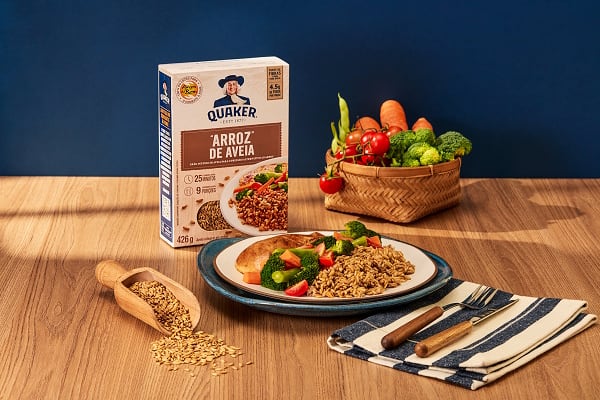
That collaboration also drives product innovation. In Brazil, where 33 million people face food insecurity and nearly 12% of children under five suffer from stunting, Quaker’s R&D team reimagined a national staple. By peeling back the oat grain’s husk, researchers produced a kernel that cooks like rice but delivers twice the fiber and protein.
The result – Quaker Oat Rice – blends easily into Brazilian meals. During its launch, 100% of profits were donated to Amigos do Bem, providing 25,000 meals in its first year. The company says the product is designed to make nutritious eating “as simple as rice and beans or as fancy as a risotto.”
For Smith, that kind of innovation shows how local relevance and scientific rigor can work together. “It’s about listening, learning and evolving to ensure our efforts are sustainable and truly impactful at scale.”
Measuring long-term impact

PepsiCo’s nutrition work doesn’t end with the first serving. “Success means more than just delivering nutrition – it’s about creating lasting change and impact,” Smith says. “We work closely with our partners to evaluate how these programs improve food security over time. Because our strategy focuses on both access to food and opportunity, we also measure broader outcomes like increased school attendance and improved classroom performance.”
He describes the effort as building “ecosystems of support” intended to continue long after the first meal is served. Tracking behavior change and community feedback helps ensure the programs evolve and expand.
This approach has drawn attention from development agencies, including the FAO and the World Food Programme, which emphasize the role of private-sector partnerships in tackling hunger at scale.
Research at the core

“Research and development are at the heart of making these programs sustainable and locally relevant,” Smith says. “Our teams work to reformulate products using regional grains and flavors, helping ensure they meet both nutritional needs and cultural preferences. This isn’t about one-size-fits-all solutions – it’s about co-creating with communities.”
He points to Quaker Qrece as an example of science translating directly into health outcomes. The product underwent clinical testing in Latin America to verify its effectiveness in addressing moderate to mild malnutrition. “R&D brings high nutritional standards while also working to ensure the products we create maintain the quality and taste people expect. It also allows us to innovate responsibly, using science to support health while honoring local food traditions.”
For Smith, that dual focus on evidence and empathy is what gives the initiative its staying power. “Every community is different, but the core principles – affordability, accessibility and cultural relevance – can be adapted globally.”
As the FAO warns that nearly 2.4 billion people lack regular access to nutritious food, PepsiCo’s Quaker brand is trying to prove that big companies can use science to make a measurable difference.
Quaker’s science-led nutrition impact
* 6,000 children to benefit in the next phase of Bowl of Growth (India)
* 25,000 meals funded by Quaker Oat Rice (Brazil)
* 16,000 children supported through Qrece (Mexico)
* 3,000 children reached in Qrece Guatemala’s latest phase
* PepsiCo aims to reach 50 million people with nutritio
us food by 2030


